California Driver License Classes
| You May Drive… | And You May Tow… | Examples… |
|---|---|---|
| You May Drive…With a Commercial Class A License: Any legal combination of vehicles, including vehicles under Class B and Class C. | And You May Tow…any single vehicle with a Gross Vehicle Weight Rating (GVWR) of more than 10,000 pounds. any trailer bus, with endorsement OR more than 1 vehicle, with endorsement. any vehicles under Classes B and C. | Examples…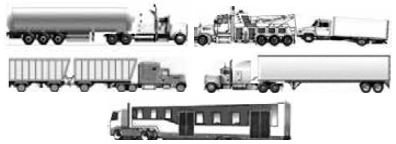 |
| You May Drive…With a noncommercial Class A License: Any vehicles under Class C. Any housecar over 40 feet but not over 45 feet. | And You May Tow…travel trailers weighing over 10,000 pounds GVWR, not used for hire. fifth-wheel travel trailers weighing over 15,000 pounds, not used for hire. With a vehicle weighing 4,000 pounds or more unladen, you may tow a: livestock trailer exceeding 10,000 pounds GVWR but not exceeding 15,000 pounds GVWR if the vehicle is controlled and operated by a farmer, used to transport livestock to or from a farm, not used in commerce or contract carrier operations, and is used within 150 miles of the person’s farm. | Examples…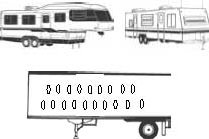 |
| You May Drive…With a Commercial Class B License: a single vehicle with a GVWR of more than 26,000 pounds. a 3-axle vehicle weighing over 6,000 pounds. a bus (except a trailer bus), with endorsement. any farm labor vehicle, with endorsement. all vehicles under Class C. | And You May Tow…a single vehicle with a GVWR of 10,000 pounds or less. any vehicle a Class C licensed driver may tow. | Examples… |
| You May Drive…With a noncommercial Class B License: any vehicles under Class C. any housecar over 40 feet but not over 45 feet, with endorsement. With a Basic Class C License: a 2-axle vehicle with a GVWR of 26,000 pounds or less. a 3-axle vehicle weighing 6,000 pounds gross or less. a motorized scooter. any housecar 40 feet or less. A farmer or employee of a farmer may also drive: any combination of vehicles with a Gross Combination Weight Rating (GCWR) of 26,000 pounds or less if used exclusively in agricultural operations and it is not for hire or compensation. With a Commercial Class C License: Any Class C vehicle carrying hazardous materials which requires placards. The hazardous materials (HazMat) endorsement must be on the license. Drivers who transport hazardous wastes, as defined by CVC §§353 and 15278, are also required to have the HazMat endorsement. | And You May Tow…a single vehicle with a GVWR of 10,000 pounds or less including a tow dolly, if used. With a vehicle weighing 4,000 pounds or more unladen, you may tow a: trailer coach not exceeding 9,000 pounds gross. trailer coach or fifth-wheel travel trailer under 10,000 pounds GVWR when towing is not for compensation. fifth-wheel travel trailer exceeding 10,000 pounds but not exceeding 15,000 pounds GVWR, when towing is not for compensation and with endorsement. Note No passenger vehicle regardless of weight, may tow more than 1 vehicle. No motor vehicle under 4,000 pounds unladen may tow any vehicle weighing 6,000 pounds or more gross (CVC §21715). | Examples… |
| You May Drive…With a Motorcycle Class M1 License: 2-wheel motorcycle, motor-driven cycle, or motorized scooter With a Motorcycle Class M2 License: Motorized bicycle, moped, any bicycle with an attached motor, or motorized scooter. | And You May Tow…Note: Class M1 or M2 is added to any other class license after passing law and skill tests. | Examples… |
Section 1: Introduction
There is a federal requirement that each state have minimum standards for licensing of commercial drivers. The California Commercial Motor Vehicle Safety Program was enacted to improve traffic safety on our roadways. As a result, California has developed licensing and testing requirements for drivers of commercial vehicles that equals or exceeds federal standards.
This handbook provides driver license (DL) testing information for drivers who wish to have a commercial learner’s permit (CLP)/commercial driver license (CDL). This handbook does not provide information on all the federal and state requirements needed before you can drive a commercial motor vehicle (CMV). More information may be found in Title 49, Code of Federal Regulations (CFR) or the California Vehicle Code (CVC).
Who Needs a CDL
You Must Have a CDL to Operate:
- A single vehicle with a gross vehicle weight rating (GVWR) of 26,001 pounds or more.
- A combination of vehicles with a gross combination weight rating (GCWR) of 26,001 pounds or more.
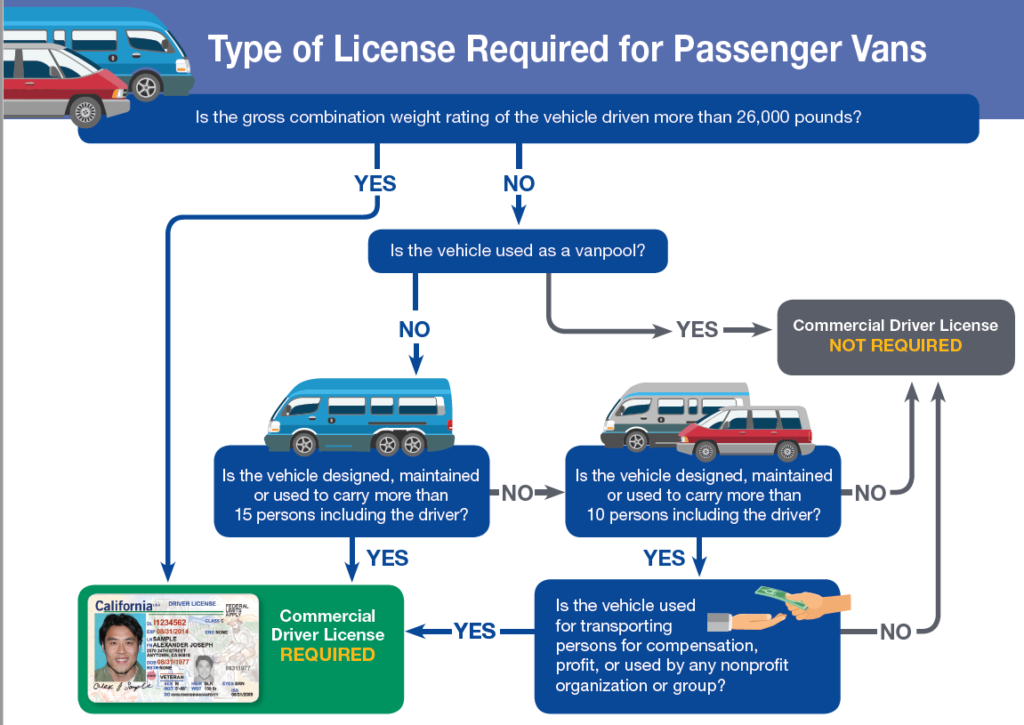
- A vehicle designed, used, or maintained for carrying more than 10 passengers, including the driver (see chart below).
- A 3-axle vehicle weighing more than 6,000 pounds.
You Must Have a CDL When:
- Towing a vehicle or trailer, which has a GVWR of 10,001 pounds or more.
- Transporting hazardous materials (HazMat), which require placards.
- Transporting HazMat, as defined in California Health and Safety Code (CHSC) §25115 and §25117.
- Towing any combination of 2 trailers or vehicle and trailer.
Horse trailers with living quarters and a GVWR over 10,000 pounds require a commercial Class A DL. Restriction 88 will be added to the DL if the truck and trailer GCWR is under 26,001 pounds.
Restriction 88–restricted to combination vehicles with a GCWR of less than 26,001 lbs. and the GVWR of the vehicle(s) being towed is in excess of 10,000 lbs.
Horse trailers are defined as property carrying vehicles and the addition of “living quarters” to a trailer does not permanently alter that vehicle for human habitation. The “living quarters” are secondary or incidental to the primary function of the vehicle, which is transporting property.
How to Get a CLP/CDL
Commercial Learner’s Permit (CLP)
The commercial instruction permit has been renamed (CLP) to comply with federal regulations. The CLP:
- Applicant must be at least 18 years of age.
- Will not be issued to an applicant until they have obtained a valid California DL, that, at a minimum, allows the applicant to operate a noncommercial Class C motor vehicle. A temporary California DL is acceptable.
- Is only valid when accompanied by the CLP holder’s valid California DL.
- Will be valid for a maximum of 180 days from the date of issuance and may be renewed for up to an additional 180 days, provided the CLP expiration date does not exceed a period of 1
–year from the initial application date. - Is limited to the following endorsements:
- Tank (N).
- Passenger (P).
- School Bus (S).
- Holder with an “N” endorsement is prohibited from operating a tank vehicle unless the tank is empty. The thank must be purged if it previously contained HazMat.
- Holder with a “P” endorsement and/or “S” endorsement is prohibited from operating a CMV with passengers, other than federal/state auditors and inspectors, test examiners, other trainees, and the accompanying CDL holder.
- Holder must wait a minimum of 14 days after initial CLP issuance to be eligible to take the skills test. The 14-day waiting period applies to classification upgrades and endorsement/restriction changes that require a skills test.
- Holder must be accompanied by a CDL holder while operating a CMV. The CDL holder must possess the appropriate class CDL and endorsements necessary to operate the CMV.
- Holder must surrender their CLP and DL to DMV prior to being issued a CDL.
Applicants Applying for a CDL:
- Must be 18 years of age.
- Must obtain a California Noncommercial Class C DL (a temporary/interim DL is acceptable). The DL must be carried to validate the CLP CFR, Title 49 §§383.5, and 383.25).
- May drive for hire within California if you are 18 years of age or older and do not engage in interstate commerce activities.
- Must be at least 21 years old to drive a commercial vehicle engaged in interstate commerce or transport HazMat or wastes (intrastate or interstate commerce) [CVC] §12515).
Provide the Following Items:
- A completed Commercial Driver License Application (DL 44C/eDL 44C) form. The eDL 44C may be completed online in advance. Signing this form means you agree to submit to a chemical test to determine the alcohol or drug content of your blood. If you refuse to sign this form, the Department of Motor Vehicles (DMV) will not issue or renew your DL.
- Your true full name
- Approved Medicals (See Section 1.2)
- An acceptable identity (birth date/legal presence) document. All applicants for an original, renewal, upgrade, or transfer of their CLP/CDL must submit proof of legal presence in the U.S. as authorized under federal law.
- If the name on your identity document is different from the name on your CDL application, you must also submit an acceptable true full name document.
- Your true full name, as shown on your identity document, will appear on your CLP/CDL.
- An acceptable identity or true full name document is produced by an issuing authority (for example, county, state, etc.).
- This document is a certified copy of the original (the original is always retained by the issuing authority) and contains an impressed seal or original stamped impression.
- The certified copy will be returned to you.
- If you make a copy of the certified copy, DMV will not accept it for identity verification.
- For more information on acceptable identity documents, visit dmv.ca.gov or call 1-800-777-0133.
- Residency (Domicile). A California driver must provide 1 document as proof of California residency for original, and upon each renewal, transfer, or upgrade. The address on the residency document must match the residence address on the DL 44C. For more information on acceptable residency documents or REAL ID Compliant CLP/CDL, visit dmv.ca.gov or call 1-800-777-0133.
- Provide proof of your social security number. Your social security number (SSN) will be verified with the Social Security Administration while you are in the office. For more information on social security documents, visit dmv.ca.gov or call 1-800-777-0133.
Note If you are applying for an original CDL (REAL ID or federal non-compliant), a social security card is the only acceptable proof of SSN.
- A Certificate of Driving Skill (DL 170 ETP). If your employer is authorized by DMV to issue such certificates. Both you and your employer must sign this form.
- The application fee. This fee is good for 12 months from the application date. The CLP is good for a maximum of 180 days and may be renewed for an additional 180 days without retaking the knowledge tests, provided the expiration date of the CLP does not exceed a period of 1-year from the application date. Scores for passed segments of the skills test are only valid during the initial issuance (first 180 days) of the CLP. Passed segments of the skills test (vehicle inspection, basic control skills, and road test) must be retaken if the CLP is renewed.
You are allowed 3 attempts to pass the knowledge test(s) and a total of 3 attempts to pass the entire skills test on a single application. If you fail any knowledge test(s) there is not a waiting period to retake. If you fail any segment of the skills tests (vehicle inspection, basic control skills, or road test), it will count as 1 failure towards the maximum 3 attempts you are allowed. EXAMPLE: Failing the vehicle inspection, basic control skills, and road test counts as a 3-time failure (or any failure combination equaling 3). However, if you are required to take the skills test for separate types of vehicles (Class A or passenger transport vehicle), you are allowed 3 skills test attempts for the Class A vehicle and 3 skills test attempts for the passenger transport vehicle. If you fail the basic skills test or the road test, there will be a retest fee charged upon your return to take the subsequent test. There is not a waiting period to retake basic control skills test(s).
| Fees subject to legislative change each January 1. | ||
|---|---|---|
| Fees subject to legislative change each January 1.If the class of license is… | and the application type is… | the fee is… |
| Fees subject to legislative change each January 1.Commercial Class A or B | an original (with or without a driving test) | $73 |
| Fees subject to legislative change each January 1.a renewal ….. | $43 | |
| Fees subject to legislative change each January 1.a commercial driving or skill retest | $33 | |
| Fees subject to legislative change each January 1.a duplicate (replacement) license | $33 | |
| Fees subject to legislative change each January 1.a name change | $27 | |
| Fees subject to legislative change each January 1.to remove a restriction(s) imposed due to vehicle size or equipment (DT required) | $73 | |
| Fees subject to legislative change each January 1.add an endorsement other than PV | $43 | |
| Fees subject to legislative change each January 1.add a passenger transport endorsement (PV) | $73 | |
| Fees subject to legislative change each January 1.add noncommercial Class A to a Class B | $43 | |
| Fees subject to legislative change each January 1.add a motorcycle license (Class M1 or M2) | $43 | |
| Fees subject to legislative change each January 1.add a firefighter endorsement | $27 | |
| Fees subject to legislative change each January 1.Commercial Class C | an original (with/without a driving test) | $43 |
| Fees subject to legislative change each January 1.a renewal | $43 | |
| Fees subject to legislative change each January 1.an upgrade: | ||
| Fees subject to legislative change each January 1.to remove an air brake restriction (DT required) | $43 | |
| Fees subject to legislative change each January 1.to add an endorsement not requiring a driving test… | $43 | |
| Fees subject to legislative change each January 1.to add a motorcycle license (Class M1 or M2) | $43 | |
| Fees subject to legislative change each January 1.to add a Firefighter endorsement | $27 | |
| Fees subject to legislative change each January 1.a commercial driving or skill retest | $33 | |
| Fees subject to legislative change each January 1.a duplicate (replacement) license | $33 | |
| Fees subject to legislative change each January 1.a name change | $27 | |
Additional Requirements
All commercial vehicle drivers must:
- Be a California resident before applying for a California CLP/CDL.
- Disclose all states in which they were previously licensed during the past 10 years and surrender all out-of-state DLs(current or expired), if any.
- Certify that they do not have a DL from more than 1 state or country.
- Self-certify what type of commercial commerce you expect to operate.
- Notify their home state DMV of any conviction which occurred in other states within 30 days of the conviction.
- Notify their employer of any conviction within 30 days of the conviction using the Report of Out-of-State Traffic Conviction by a Commercial Driver (DL 535) form.
- Notify their employer of any revocation, suspension, cancellation, or disqualification before the end of the business day following the action.
- Give their employer a 10-year employment history of commercial driving, if applying for a job as a driver.
Commercial Driver Licensing Offices
Call 1-800-777-0133 to schedule a CDL driving test at one of the following offices:
- Arleta
- Bakersfield
- Bishop
- El Centro
- Eureka
- Fontana Commercial Driving Test Center
- Fremont
- Fresno Commercial Driving Test Center
- Gardena Commercial Driving Test Center
- Lancaster
- Modesto
- Mountain View
- Rancho San Diego
- Redding
- Salinas
- San Luis Obispo
- Santa Rosa
- Santa Teresa
- Stockton
- Ukiah
- Ventura
- W Sacramento Commercial Driving Test Center
- Yuba City
For latest commercial driver licensing offices, go to www.dmv.ca.gov.
Endorsements
A special endorsement is also required to drive the following types of vehicles. The endorsement shows as a single letter on the DL.
- Placarded or marked vehicles transporting hazardous materials or wastes—(H). Any driver, regardless of the vehicle Class (A, B, or C), who wants to haul any material that has been designated as hazardous under 49 United States Code (U.S.C.) §5103 and is required to be placarded under CFR, Title 49 §172 subpart F; or any quantity of a material listed as a select agent or toxin CFR, Title 42 §73 must add an “H” endorsement to their CDL. They must pass a special knowledge examination on how to recognize, handle, and transport HazMat.Note Applicants who apply for an original Class C CDL with the “H” endorsement are required to complete the skills test.
- The Transportation Security Administration (TSA) and the U.S. Department of Transportation (DOT) require background checks on commercial drivers who are certified to transport HazMat. The background checks include a review of criminal, immigration, and FBI records. If the driver is found to represent a security threat, TSA will notify the person and the state will deny issuance of an endorsement.
- Tank vehicles (including a cement truck)—(N). Drivers of any CMV that is designed to transport any liquid or gaseous materials within a tank or tanks having an individual rated capacity of more than 119 gallons, and an aggregate rated capacity of 1,000 gallons or more that is either permanently or temporarily attached to the vehicle or the chassis must add a “N” endorsement to their CLP/CDL. A CMV transporting an empty storage container tank, not designed for transportation, with a rated capacity of 1,000 gallons or more that is temporarily attached to a flatbed trailer is not considered a tank vehicle. The endorsement applies to applicants who wish to drive a tank in Class A, B, or C CDL. Liquids in bulk cause driving control problems because the cargo is heavy, prone to shifting, and has a high center of gravity. These drivers must pass a special knowledge examination on the problems posed by large volume liquid cargos to add the endorsement to their CLP/CDL. Note Applicants applying for an original Class C CDL with the “N” endorsement are required to complete the skills test.
- Passenger transport vehicles—(P). Drivers who want to drive a vehicle having a design capacity to carry 10 or more people, including the driver, must add a “P” endorsement to their CLP/CDL. They must pass a special knowledge examination on safety considerations when transporting passengers and must pass skills tests in a passenger vehicle. The endorsement applies to applicants who want to drive a bus in any Class A, B, or C CDL. Note Applicants applying for a “P” endorsement are required to complete the skills test.
- School bus—(S). Drivers who want to drive a school bus must add an “S” endorsement to their CLP/CDL. They must pass a special knowledge examination on safety considerations when transporting passengers in a school bus and must pass skills tests in a school bus. The endorsement applies to applicants who wish to drive a school bus in any Class A or B CDL.
- Double/Triples combination—(T). Many drivers who are qualified to drive a Class A CDL may want to pull double or triple trailers. Research shows that considerable additional knowledge and skill is necessary to safely pull double and triple trailers in various traffic conditions and driving environments. Consequently, adding the “T” endorsement to drive Class A CDL is necessary if wanting to pull double or triple trailers. The CDL holder must pass a special knowledge examination on the problems associated with pulling multiple trailers. IMPORTANT: Triple trailers are not legal in California.
- Tank vehicles transporting hazardous materials or wastes—(X). (Hazardous waste must meet the definition of (CVC) §§353 and 15278.) Drivers of tank vehicles who haul HazMat or waste in amounts requiring placards must add an “X” endorsement to their CDL to show that they passed the special knowledge examinations for both tank vehicles and HazMat.
- Firefighter—(F). Required for the operation of firefighting equipment. (Not required, but optional for Class A or B CDL holders.)
Restrictions
- Restrictions may be added to a CLP/CDL based upon the type of vehicle and equipment that the driver uses for the skills test. There are 10 standardized restriction codes. Note If a CLP is issued with a “P” or “S” endorsement, it must also contain a Restriction P–No passenger in a CMV bus restriction.
- If a CLP is issued with an “N” endorsement, it must also contain a Restriction X–No cargo in a CMV tank vehicle.
- (E)–No manual transmission: If an applicant performs the skills test in a vehicle equipped with an automatic transmission, DMV must indicate on the CDL, if issued, that the person is restricted from operating a CMV equipped with a manual transmission. For the purpose of the skills test and restriction, an automatic transmission includes any transmission not operating fully on the gearshift and clutch principle.
- (K)–Intrastate only: If an applicant certifies their status as either Non-Excepted Intrastate (NA) or Excepted Intrastate (EA), the state must indicate on the CDL, if issued, that the person is restricted from operating a CMV in Interstate commerce. States may impose this restriction for reasons other than those specified above.
- (L)–No Air brake equipped CMV: If an applicant does not take or fails the air brake component of the knowledge test, or performs the skills test in a vehicle not equipped with air brakes, DMV must indicate on the CLP or CDL, if issued, that the person is restricted from operating a CMV equipped with any type of air brakes. For the purposes of the skills test and restriction, air brakes include any braking system operating fully or partially on the air brake principle.
- (M)–No Class A passenger vehicle: If an applicant applying for a “P” endorsement performs the skills test in a passenger vehicle requiring a Class B CDL, DMV must indicate on the CDL, if issued, that the person is restricted from operating a passenger vehicle requiring a Class A CDL.
- (N)–No Class A and B passenger vehicle: If an applicant applying for a “P” endorsement performs the skills test in a passenger vehicle requiring a Class C CDL, DMV must indicate on the CDL, if issued, that the person is restricted from operating a passenger vehicle requiring a Class A or B CDL.
- (O)–No tractor–trailer CMV: If an applicant performs the skills test in a combination vehicle for a Class A CDL with the power unit and towed unit connected with a pintle hook or other non fifth-wheel connection, DMV must indicate on the CDL, if issued, that the person is restricted from operating a tractor-trailer combination connected by a fifth-wheel that requires a Class A CDL. An applicant who passes a skills test using a combination vehicle that is not a truck tractor semi-trailer combination, but is otherwise equipped with a fifth-wheel, will be issued a CDL with Restriction “O”.
- (P)–No passenger in CMV bus: A CLP holder with a “P” endorsement is prohibited from operating a CMV carrying passengers, other than federal/state auditors and inspectors, test examiners, other trainees, and the CDL holder accompanying the CLP holder as prescribed by CFR, Title 49 §383.25(a)(1) of this part. (S)–A CLP holder with an “S” endorsement is prohibited from operating a school bus with passengers, other than federal/state auditors and inspectors, test examiners, other trainees, and the CDL holder accompanying the CLP holder as prescribed by CFR, Title 49 §383.25(a)(1) of this part.
- (V)–Medical variance: If DMV is notified according to CFR, Title 49 §383.73(o)(3) that the driver has been issued a medical variance, DMV must indicate the existence of such a medical variance on the Commercial Driver License Information System (CDLIS) driver record and the CDL document, if issued, using Restriction “V”.
- (X)–No cargo in CMV tank vehicle: A CLP holder with an “N” endorsement may only operate an empty tank vehicle and is prohibited from operating any tank vehicle that previously contained HazMat that has not been purged of any residue.
- (Z)–No full air brake equipped CMV: If an applicant performs the skills test in a vehicle equipped with air over hydraulic brakes, DMV must indicate on the CDL, if issued, that the person is restricted from operating a CMV equipped with any braking system operating fully on the air brake principle. For the purposes of the skills test and restriction, air over hydraulic brakes includes any braking system operating partially on the air brake and partially on the hydraulic brake principle.
CDL Exceptions
Exceptions to the CDL requirements are:
- Drivers exempted under CHSC§25163.
- Drivers operating a vehicle in an emergency situation at the direction of a peace officer.
- Drivers who tow a fifth-wheel travel trailer over 15,000 pounds GVWR or a trailer coach over 10,000 pounds GVWR, when the towing is not for compensation. Drivers must have a noncommercial Class A DL.
- Drivers of housecars over 40 feet but not over 45 feet, with endorsement.
- Non-civilian military personnel drovers operating military vehicles.
- Implement of husbandry operators who are not required to have a DL.
- Vanpool drivers
Special Certificates
Special certificates may sometimes be required in addition to a CDL, depending on the type of vehicle or load you carried.
Note It is unlawful to drive a school bus or transit vehicle while using a wireless (cell) telephone for non-work purposes. Emergency calls to law enforcement, a health care provider, fire department, or other emergency services are permitted.
Apply at DMV Field offices for the Following Certificates:
Ambulance Driver Certificate—required for driving an ambulance used commercially in emergency service (CVC §2512). Persons who have an ambulance driver certificate must submit a copy of the Medical Examination Report (MER) form MSCA-5875 and Medical Examiner’s Certificate (MEC) form MCSA-5876 to DMV every 2 years.
Hazardous Agricultural Materials (HAM) Certificate*— exempts persons who transport hazardous waste or placarded loads from CDL requirements if the:
- Person is at least 21 years of age.
- Person is employed in an agricultural operation.
- Load is not being transported for compensation.
- Vehicle is owned or leased by a farmer.
- Person has completed a HAM program approved by CHP. Although the person who qualifies for a HAM is not required to have a CDL, CMV penalties and sanctions will apply.
- Person submits a copy of the MER and MEC or Health Questionnaire (DL 546) (PDF) form(s) to DMV every 2 years.
- Person operates a vehicle which is an implement of husbandry or requires a noncommercial Class C DL and does not exceed 50 miles from one point to another.
Verification of Transit Training (VTT) Document—requires drivers of transit bus vehicles to comply with specified training requirements. Transit bus vehicles provide the public with regularly scheduled transportation for which a fare is charged (does not include general public paratransit vehicles). Drivers who have a school bus driver certificate or school pupil activity bus certificate do not need a VTT.
Apply at CHP Offices for the Following Certificates:
General Public Paratransit Vehicle (GPPV) Certificate*— required for any person who drives:
- A vehicle which carries not more than 24 persons, including the driver, and provides local transportation to the general public (for example, Dial-A-Ride) (CVC §§336 and 12523.5).
- Pupils at or below the 12th grade level to or from a public or private school or school activity.
- Vehicles used in the exclusive transportation of disabled persons.
School Bus Driver Certificate*— required for any person who drives a bus for any school district or other party carrying public or private pupils (CVC §§545, 12517, 12522, 34500, and 34501.5). A school bus driver must also have an “S” endorsement on their CDL. School bus drivers 65 years of age and older must submit annual MER and MEC forms to DMV (CVC §12517.2).
School Pupil Activity Bus Certificate (SPAB)*— required for any person who drives a bus for any school district or any other party carrying public or private pupils for school-related activities (CVC §§546 and 12517).
Farm Labor Vehicle Certificate*— required for any person who drives farm labor trucks and buses (CVC §§322 and 12519).
Note: The driver and all passengers in a farm labor vehicle are required to use seat belts.
Youth Bus Certificate*— required for any person who operates any bus, other than a school bus, which carries not more than 16 children and the driver to or from a school, to an organized non-school related activity, or to and from home (additional CHP training required) (CVC §§680 and 12523).
Tow Truck Driver Certificate*— required for drivers in emergency road service organizations that provide freeway service patrol operations pursuant to an agreement or who contract with a specified public transportation planning entity (traffic commission).
Vehicle for Developmentally Disabled Persons (VDDP)*— required for any person who operates a vehicle for a business or nonprofit organization or agency whose primary job is to transport for hire persons with developmental disabilities (California Welfare and Institutions Code §4512(A) and CVC §12523.6).
*Drivers subject to commercial driver sanctions.
General
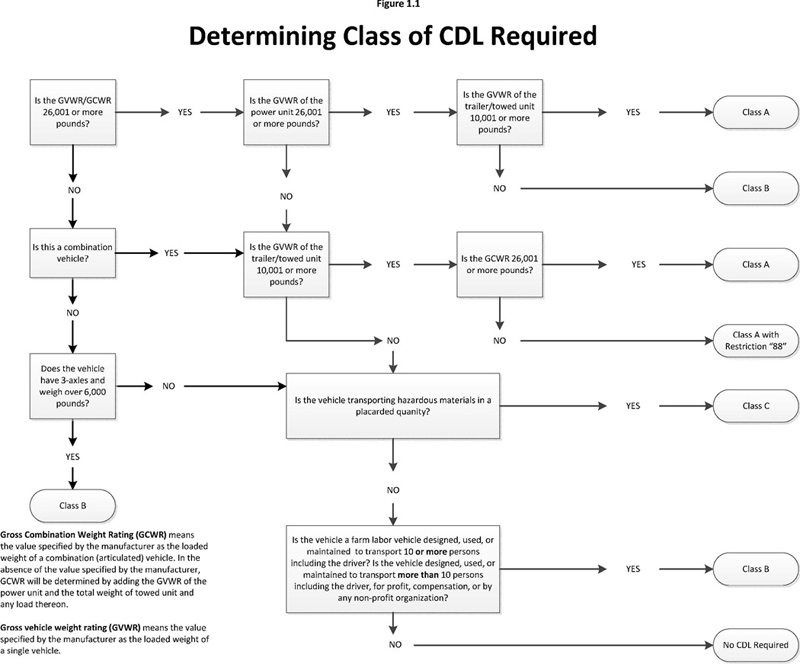
To get a CDL, you must pass both the knowledge and skills tests. This handbook is designed to help you pass the tests. This handbook is not a substitute for a truck driver training class or program. Formal training is the most reliable way to learn the many special skills required for safely driving a large CMV and becoming a professional driver in the trucking industry. Figure 1.1 will help you determine if you need a CDL.
1.1 Commercial Driver License Tests
1.1.1 – Knowledge Tests
The commercial knowledge tests are available in English, Arabic, Chinese, Punjabi, Russian, and Spanish. All knowledge tests administered by DMV that are required to be taken by a CDL applicant or cardholder must be taken using the Automated Knowledge Testing equipment (AKTE).
You must take 1 or more knowledge tests, depending on what class of license and what endorsements you need. If you are adding an endorsement, but not upgrading to a higher classification, DMV will waive all knowledge and endorsement tests completed or waived on the previous application, including HazMat, if the new application is started within 12 months of the previous renewal date or original CDL issue date. CDL knowledge tests include:
- The general knowledge test, required to be taken by all applicants.
- The passenger transport test, required to be taken by all bus driver applicants.
- The air brakes test, required to be taken by drivers of vehicles with air brakes, including air over hydraulic brakes..
- The combination vehicles test, required if you want to drive combination vehicles.
- The hazardous materials test, required if you want to haul hazardous materials as defined in CFR, Title 49 §383.5. To obtain this endorsement, you must pass a Transportation Security Administration (TSA) background check.
- The tank vehicle test, required if you want to haul any liquid or gaseous materials in a tank or tanks having an individual rated capacity of more than 119 gallons and an aggregate rated capacity of 1,000 gallons or more that is either permanently or temporarily attached to the vehicle or chassis.
- The doubles/triples test, required if you want to pull double or triple trailers. (Triple trailers are not legal in California.)
- The school bus test, required if you want to drive a school bus.
- The firefighter endorsement test, required to operate firefighting equipment. (Not required but optional for Class A or B CDL holders.)
Note Allow for 2-3 hours if taking all tests. Your knowledge and/or endorsement test(s) will not be returned to you.
You may take the knowledge test at any DMV field office. Office hours vary. Visit dmv.ca.gov or call 1-800-777-0133 to make an appointment.
Use of Testing Aids Are Prohibited
The use of testing aids is strictly prohibited during the knowledge test. This includes, but is not limited to: the California Commercial Driver Handbook, cheat sheets, or electronic communication devices such as a cell phone, hand-held computer, watch, etc.
If any testing aid(s) or a substitute test taker is used during the knowledge test, the knowledge test will be marked as a “failure.” An action may also be taken by DMV against your driving privilege or the driving privilege of anyone else who assists the applicant in the examination process.
During the vehicle inspection test, formerly known as pre-trip, DMV does not allow the use of testing aids, other than the vehicle inspection guide (Section 11) in this handbook. If you are caught using anything other than the inspection guide, the commercial skills test will be marked as a failure. The use of electronic devices, such as cell phones, blue tooth, CB radios, Apple watch, etc., is prohibited during the commercial skills test. In addition, people waiting in the testing vicinity are prohibited from using hand signals and shouting instructions. If this occurs, the test will be discontinued and be marked as a commercial skills test failure. If markings are found on the vehicle being used for the test to help with passing the vehicle inspection or basic control skills test, formerly known as skills test, including but not limited to: writing on the vehicle, tape, paint markings that do not appear like they belong, or markings on the curbs, walls, or trees that would help the applicant maneuver the vehicle for the basic control skills test, the test will be discontinued and marked as a failure.
The use of any recording device, including a video event recorder (dash cam), is prohibited during any commercial skills test. A dash cam is a device that continuously records in a digital loop, recording audio and/or video, but saves audio and/or video only when triggered by an unusual motion or crash or when the vehicle is operated to monitor driver performance. If the vehicle is equipped with a recording device, it must be powered off or the visual and/or audio recording features must be disabled. If the recording device cannot be powered off or disabled, which is typical for a CMV, the applicant must block the recording device, so there is no visual and/or audio recording during the road test.
1.1.2 – Skills Tests
If you pass the required knowledge test(s), you can take the CDL skills tests. There are 3 types of general skills tests that you are required to pass: vehicle inspection, basic control skills, and road test. formerly known as drive test. You must take these tests in the type of vehicle for which you wish to be licensed. Any vehicle that has components marked or labeled cannot be used for the vehicle inspection test. All skills test must be conducted in English. An interpreter is prohibited for the CDL skills test.
Vehicle Inspection Test. You will be tested to see if you know whether your vehicle is safe to drive. You will be asked to do a vehicle inspection and explain to the examiner what you would inspect and why. This test takes approximately 40 minutes. If you do not pass the vehicle inspection test, the other tests will be postponed. There is no additional fee for retaking the vehicle inspection test on the same application. See Section 11 for vehicle inspection test information.
Basic Control Skills Test. You will be tested on your skill to control the vehicle. You will be asked to move your vehicle forward, backward, and turn it within a defined area. These areas may be marked with traffic lanes, cones, barriers, or something similar. The examiner will tell you how each control test is to be done. You will be scored on your ability to properly perform each exercise. This test takes approximately 30 minutes. Failure of any skill test ends the test. A retest fee is due for each basic control skills retest. See Section 12 for skill test information.
Road Test. You will be tested on your skill to safely drive your vehicle in a variety of traffic situations on a DMV-specified route. The situations may include left and right turns, intersections, railroad crossings, curves, up and down grades, single or multi-lane roads, streets, or highways. The examiner will tell you where to drive. The test takes approximately 45–60 minutes. If you fail the road test, a retest fee is charged for each additional road test. See Section 13 for road test information.
A road test is required:
- For an original CDL.
- To remove a restriction placed on your CDL because of vehicle size or equipment.
- To add a “P” or “S” endorsement.
- To renew a CDL expired for more than 2 years.
CDL Restrictions
Your CDL will be restricted to the type of vehicle you use for the driving test. For example, if your test vehicle does not have air brakes, you will be restricted to driving vehicles without air brakes. If your passenger transport vehicle carries 15 persons or less including the driver, you will be restricted to driving a small size bus.
Troops to Trucks
The Troops to Trucks program allows DMV to waive the CDL skills test for qualified military service members who are employed, or were within the last year, in a military position requiring the operation of a military motor vehicle equivalent to a CMV on public roads and highways. Qualified applicants must submit a completed CDL Certification for Military Waiver of CDL Driving Test (DL 963) (PDF) form, and a Commanding Officer’s Certification of Driving Experience (DL 964) (PDF) form, in addition to any other documents required to apply for a CDL.
These forms are available at dmv.ca.gov. Active duty members will need to provide their military identification (ID), while veterans will need to provide a Certificate of Release or Discharge from Active Duty (DD Form 214), which shows their discharge was within the last year.
Note The CDL skills test will not be waived for an “S” and/or “P” endorsement.
Figure 1.2 details which sections of this handbook you should study for each particular class of license and each endorsement.
| WHAT SECTIONS SHOULD YOU STUDY? | ||||||||
|---|---|---|---|---|---|---|---|---|
| Sections to Study | WHAT SECTIONS SHOULD YOU STUDY?License Type | Sections to StudyEndorsement | ||||||
| WHAT SECTIONS SHOULD YOU STUDY?Class A | Sections to StudyClass B | Class C | Hazardous Materials | Double / Triple | Tank Vehicles | Passenger | School Bus | |
| 1 | WHAT SECTIONS SHOULD YOU STUDY?X | Sections to StudyX | 1 X | |||||
| 2 | WHAT SECTIONS SHOULD YOU STUDY?X | Sections to StudyX | 1 X | 2 | X | X | X | |
| 3 | WHAT SECTIONS SHOULD YOU STUDY?X | Sections to StudyX | 1 X | 2 | 3 | |||
| 4 | WHAT SECTIONS SHOULD YOU STUDY? | Sections to Study | 1 | 2 | 3 | 4 | X | |
| 5* | WHAT SECTIONS SHOULD YOU STUDY?X | Sections to StudyX | 1 X | 2 | 3X | 4 | 5* | |
| 6 | WHAT SECTIONS SHOULD YOU STUDY?X | Sections to Study | 1 | 2 | 3X | 4X | 5* | 6 |
| 7 | WHAT SECTIONS SHOULD YOU STUDY? | Sections to Study | 1 | 2 | 3X | 4 | 5* | 6 |
| 8 | WHAT SECTIONS SHOULD YOU STUDY? | Sections to Study | 1 | 2 | 3 | 4X | 5* | 6 |
| 9 | WHAT SECTIONS SHOULD YOU STUDY? | Sections to Study | 1 | 2X | 3 | 4X | 5* | 6 |
| 10 | WHAT SECTIONS SHOULD YOU STUDY? | Sections to Study | 1 | 2 | 3 | 4 | 5* | 6X |
| 11 | WHAT SECTIONS SHOULD YOU STUDY?X | Sections to StudyX | 1 X | 2 | 3 | 4 | 5*X | 6X |
| 12 | WHAT SECTIONS SHOULD YOU STUDY?X | Sections to StudyX | 1 X | 2 | 3 | 4 | 5*X | 6X |
| 13 | WHAT SECTIONS SHOULD YOU STUDY?X | Sections to StudyX | 1 X | 2 | 3 | 4 | 5*X | 6X |
| *Study Section 5 if you plan to operate vehicles equipped with air brakes. | ||||||||
Figure 1.2 – What to Study
1.2 – Medical Documentation Requirements
CDL drivers in interstate commerce and drivers applying for, or who hold, a certificate to drive a School Bus, School Pupil Activity Bus, Youth Bus, General Public Paratransit Vehicle, or Farm Labor Vehicle must use medical examiners listed on the National Registry of Certified Medical Examiners (National Registry). The National Registry is a federal program establishing requirements for healthcare professionals that perform physical qualification examinations for CMV drivers. This program was developed to improve highway safety and driver health by requiring medical examiners to be trained and certified so they can determine effectively whether a commercial driver’s medical fitness for duty meets federal standards.
If you are required to have a CDL as part of your job, your employer shall pay the cost of the examination unless it was performed before you applied for the job California Labor Code (CLC) §231)).
CDL drivers (interstate or intrastate) who successfully pass a commercial medical examination, will submit to DMV a valid (original or copy) MER and MEC form when applying for an original CLP or CDL or updating an existing medical expiration date. School bus drivers 65 years of age and older must submit a new medical report to DMV every year (CVC §12517.2(a)(b)).
MER and MEC forms completed by a U.S. licensed doctor of medicine (MD), doctor of osteopathy (DO), licensed physician assistant (PA), advanced practice registered nurse (APRN), or doctor of chiropractic (DC) who is listed on the National Registry of Certified Medical Examiners as clinically competent to perform the medical examination, must be given to DMV with your original application for a CLP or CDL. The MER and MEC forms must be dated within the last 2 years.
When submitting the MER, you are only required to submit pages 1–4. Page 5 of the MER form addresses meeting medical standards with a state variance. A DMV variance would exempt a driver from the federal physical standards. California does not have any variances or exemptions from the federal physical standards.
The medical examiner must complete and sign the MEC form for you to carry when you are driving commercially. You can be given a citation for driving out of class if you drive a CMV after your MEC expires.
Any noncommercial driver previously required to submit a Medical Examination Report (DL 51), ambulance drivers, van pool drivers, and Freeway Service Patrol tow truck drivers, are required to submit an MER and MEC form. A DL 51 in no longer acceptable.
A commercial driver who does not pass the medical examination may qualify for a California intrastate restricted Medical Certificate (DL 51B). These drivers must submit a MER form to DMV showing they did not pass the medical examination in order to be considered for an intrastate restricted medical certificate.
You may take the completed MER and MEC form to a DMV field office to be updated. You may also mail the MER and MEC form, at least 4 weeks prior to the expiration of your previous medical to:
Department of Motor Vehicles
CDL Unit, MS G204
PO Box 944278
Sacramento, CA 94244-2780
1.2.1 – Interstate or Intrastate Commerce
CFR, Title 49 §383.71 requires CDL drivers to disclose the type of commercial operation they are engaged in:
Non-Excepted Interstate (NI): Operates or expects to operate a CMV in interstate commerce and subject to and meets the qualification requirements under CFR, Title 49 §391. The license does not restrict the transport, origination, or destination of the load to be transported.
- Interstate commerce means trade, traffic, or transportation in the U.S. that is between:
- A place in a state and a place outside such state (including a place outside the U.S.).
- Two places in the state through another state or a place outside of the U.S.
- Two places in the state as part of trade, traffic, or transportation originating or terminating outside the state or U.S.
Non-Excepted Intrastate (NA): Operates or expects to operate in intrastate commerce and required to meet the qualification requirements under CFR, Title 49 §391. The cargo and passengers must originate and end in California. While driving commercially you may not cross state or international borders.
- Intrastate commerce means trade, traffic, or transportation in the U.S. that is:
- Between two places in the state as part of trade, traffic, or transportation originating or terminating inside the state. Note If you self-certify as operating NA (Non-Excepted Intrastate) your CDL card and driver record will reflect a CDL Intrastate Only Restriction (40/K).
Excepted Interstate (EI): California does not issue a CDL that is excepted from driver qualification requirements.
Excepted Intrastate (EA): California does not issue a CDL that is excepted from driver qualification requirements.
- Excepted and Non-Excepted Licensing
- Some states issue a CDL that does not require drivers to meet the qualifications outlined in CFR, Title 49 §391. Those drivers are considered “excepted” drivers. California does not issue that kind of DL.
- All drivers licensed by California to drive CMVs are non-excepted drivers.
IMPORTANT: You may be engaged in interstate commerce even if your vehicle does not leave the state. DMV strongly recommends a driver certify a driving type of non-excepted interstate (NI) if you meet the federal qualifications and there is any chance you might operate a CMV in interstate commerce.
1.3 – CDL Disqualifications
1.3.1 – General
You may not drive a CMV if you are disqualified for any reason.
1.3.2 – Alcohol, Leaving the Scene of an Accident, and Commission of a Felony
It is illegal to operate a CMV if your BAC is .04 percent or more. If you operate a CMV, you shall be deemed to have given your consent to alcohol testing.
You will lose your CDL for at least 1 year for a first offense for:
- Driving a CMV if your BAC is .04 percent or higher.
- Driving a CMV under the influence of alcohol.
- Refusing to undergo blood alcohol testing.
- Driving a CMV while under the influence of a controlled substance.
- Leaving the scene of an accident involving a CMV.
- Committing a felony involving the use of a CMV.
- Driving a CMV when the CDL is suspended/revoked.
- Causing a fatality through negligent operation of a CMV.
You will lose your CDL for at least 3 years if the offense occurs while you are operating a CMV that is placarded for HazMat.
You will lose your CDL for life for a second offense.
You will lose your CDL for life if you use a CMV to commit a felony involving controlled substances.
You will be put out of service for 24 hours if you have any detectable amount of alcohol under .04 percent.
1.3.3 – Serious Traffic Violations
Serious traffic violations are excessive speeding (15 miles per hour [mph] or more above the posted limit), reckless driving, improper or erratic lane changes, following a vehicle too closely, traffic offenses committed in a CMV in connection with fatal traffic accidents, driving a CMV without obtaining a CDL, or having a CDL in the driver’s possession, and driving a CMV without the proper class of CDL and/or endorsements.
You will lose your CDL for at least:
- 60 days for 2 serious traffic violations within a 3-year period involving a CMV.
- 120 days for 3 or more serious traffic violations within a 3-year period involving a CMV.
1.3.4 – Violation of Out-of-Service Orders
You will lose your CDL for at least:
- 90 days for your first violation of an out-of-service order.
- 1 year for 2 violations of an out-of-service order in a 10-year period.
- 3 years for 3 or more violations of an out-of-service order in a 10-year period.
1.3.5 – Railroad-Highway Grade Crossing Violations
You will lose your CDL for at least:
- 60 days for your first violation.
- 120 days for your second violation within a 3-year period.
- 1 year for your third violation within a 3-year period.
These violations include violation of a federal, state, or local law, or regulation pertaining to one of the following 6 offenses at a railroad-highway grade crossing for:
- Drivers who are not required to always stop, failing to stop before reaching the crossing if the tracks are not clear.
- Drivers who are not required to always stop, failing to slow down and check that the tracks are clear of an approaching train.
- Drivers who are always required to stop, failing to stop before driving onto the crossing.
- All drivers, failing to have sufficient space to drive completely through the crossing without stopping.
- All drivers, failing to obey a traffic control device or the directions of an enforcement official at the crossing.
- All drivers, failing to negotiate a crossing because of insufficient undercarriage clearance.
1.3.6 – Hazardous Materials Endorsement Background Check and Disqualifications
If you require a HazMat endorsement, you will be required to submit your fingerprints and be subject to a background check.
You will be denied or will lose your HazMat endorsement if you:
- Are not a lawful permanent resident of the U.S.
- Renounce your U.S. citizenship.
- Are wanted or under indictment for certain felonies.
- Have a conviction in military or civilian court for certain felonies.
- Have been adjudicated as lacking mental capacity or involuntarily committed to a mental health facility as specified in CFR, Title 49 §1572.109.
- Are considered to pose a security threat as determined by the TSA.
- For more information, visit universalenroll.dhs.gov or call 1-855-347-8371.
1.3.7 – Traffic Violations in Your Personal Vehicle
- The Motor Carrier Safety Improvement Act (MCSIA) of 1999 requires a CDL holder to be disqualified from operating a CMV if the CDL holder has been convicted of certain types of moving violations in their personal vehicle.
- If your privilege to operate your personal vehicle is revoked, canceled, or suspended due to violations of traffic control laws (other than parking violations), you will also lose your CDL driving privileges.
- If your privilege to operate your personal vehicle is revoked, canceled, or suspended due to alcohol, controlled substance, or felony violations, you will lose your CDL for 1 year. If you are convicted of a second violation in your personal vehicle or CMV, you will lose your CDL for life.
- If your license to operate your personal vehicle is revoked, canceled, or suspended, you may not obtain a “hardship” license to operate a CMV.
1.3.8 – Violation Point Counts
Convictions that occur while you are driving a CMV or CDL holder are retained on your driving record as listed below:
- Major violations and disqualification actions, 55 years.
- Out-of-service violations and disqualification actions, 15 years.
- Accidents, serious violations, and disqualification actions, 10 years.
- Railroad grade crossings and disqualification actions, 4 years.
- Minor convictions, 3 years.
A traffic accident for driving unsafely counts as 1 point. Any accidents you contributed to or were responsible or at fault for, are normally counted as 1 point. If you are convicted of reckless driving, driving under the influence of alcohol and/or drugs, or hit-and-run, these violations count as 2 points.
You will lose your privilege to drive if you are considered a negligent operator of a CMV when your driving record shows the following point counts:
- 4 points in 12 months
- 6 points in 24 months
- 8 points in 36 months
You may be entitled to a higher point count (6, 8, or 10 points) if you request and appear for a hearing and if 4, 6, or 8 points were not obtained in a noncommercial Class C vehicle.
A violation received in a CMV carries one and one-half times the point count. A Class A or B driver who does not have a special certificate or endorsement may be allowed 2 additional points before being considered a negligent operator.
Convictions reported by other states are added to your driving record and may result in CDL sanctions. If you have an out-of-state CDL, any conviction while operating in California will be reported to your home state.
Note When a commercial driver is cited in a noncommercial vehicle, the driver may be eligible to attend traffic school. (CVC §42005(c)).
1.3.9 – Violation of Hands Free or Texting Law
Regardless of what type of vehicle you are in at the time of violation, you will lose your CDL for at least:
- 60 days for your second violation of the cell phone hands free or texting law within a 3-year period and receive 1 point on your driving record.
- 120 days for your third and subsequent violations of the cell phone hands free or texting law within a 3-year period and receive 1 point on your driving record.
1.4 – Other CDL Rules
Other federal and state rules that affect drivers operating CMVs in all states. You must:
- Notify your motor vehicle licensing agency within 30 days if you are convicted in any other jurisdiction of any traffic violation (except parking). This is true no matter what type of vehicle you were driving.
- Notify your employer within 2 business days if your license is suspended, revoked, or cancelled, or if you are disqualified from driving.
- No one can drive a CMV without a CDL. The court’s action may involve a fine or require you to serve jail time for breaking this rule.
- If you have a HazMat endorsement, you must notify and surrender your HazMat endorsement to the state that issued your CDL within 24 hours of any conviction or indictment in any jurisdiction (civilian or military) in which you were found not guilty by reason of insanity of a disqualifying crime listed in CFR, Title 49 §1572.103, adjudicated as lacking mental capacity, involuntarily committed to a mental health facility as specified in CFR, Title 49 §1572.109, or you renounce your U.S. citizenship.
- Your employer may not let you drive a CMV if you have more than 1 license or your CDL is suspended or revoked. The court’s action may involve a fine to the employer or require the employer to serve jail time for breaking this rule.
- All states are connected to one computerized system to share information about CDL drivers. The states will check drivers’ history records to be sure that drivers do not have more than 1 CDL.
- You are not allowed to hold a mobile telephone to conduct a voice communication or dial a mobile telephone by pressing more than a single button when driving.
- You are not allowed to send or read text messages while driving.
- You must be properly restrained by a safety belt at all times while operating a CMV. The safety belt design holds the driver securely behind the wheel during an accident, helps the driver control the vehicle, and reduces the chance of serious injury or death. If you do not wear a safety belt, you are 4 times more likely to be fatally injured if you are thrown from the vehicle.
1.4.1 – State Laws and Rules
All CDL drivers must know the state laws limiting the size and weight of vehicles and loads. All CMVs must stop at locations posted for CHP testing and inspection (CVC §§2802–2805, and 2813).
Any officer, who has reason to believe a CMV is not safely loaded or the height, width, length, or weight of a vehicle and load is unlawful, is authorized to require the driver to stop and submit to an inspection, measurement, or weighing of the vehicle. The officer may have the driver stop in a suitable area and reload or remove any part of the load.
Any person driving a CMV over a highway or bridge illegally is liable for all damage caused to the highway or bridge. When the driver is not the owner of the vehicle but is operating it with the permission of the owner, the owner and driver may both have to pay for the damage.
State Air Emissions Rules
All commercial diesel vehicles and equipment that operate in California, even those based out of state or out-of-country, are subject to the emission requirements as specified by California Air Resources Board (CARB). To enforce these requirements, CARB is authorized to inspect all vehicles and equipment for excessive smoke, tampering, and compliance with fleet rules and issue citations with substantial penalties for non-compliance. Commercial diesel vehicle inspections are performed by CARB inspection teams at border crossings, CHP weigh stations, fleet facilities, and randomly selected roadside locations. Some key regulations are as follows:
- Truck and Bus Regulation. Be aware! Beginning in 2020, you will no longer be able to register vehicles with DMV that are not compliant with the truck and bus regulation. Regulation apply to nearly all privately and federally-owned diesel trucks and buses and
toprivately and publicly-owned school buses with a GVWR greater than (>) 14,000 pounds. Since January 1, 2012, all diesel trucks and buses that operate in California must be upgraded with a diesel particulate filter (DPF) to reduce exhaust emissions. Since January 1, 2015, lighter and older heavier diesel trucks must be replaced with 2010 model year engines or equivalent. By January 1, 2023, nearly all trucks and buses will need to have 2010 model year engines or equivalent. The regulation provides a variety of flexibility options tailored to fleets operating low use vehicles and fleets operating in select locations like agricultural and construction areas.
The regulation does provide a variety of flexibility options tailored to fleets operating low use vehicles and fleets operating in selected locations like agricultural and construction. - Emission Control Label (ECL). All diesel trucks and buses with a GVWR >6,000 pounds that have a 1974 or newer engine must have an ECL on the engine. A properly affixed and legible manufacturer ECL is required as proof that the engine meets emission standards.
- Periodic Smoke Inspection Program (PSIP). All owners of California-based fleets with 2 or more on-road diesel trucks with a GVWR > 6000 pounds for engines 4 years old and older, must annually test the opacity of these vehicles and maintain test records for a minimum of 2 years. Starting in mid-2019, trucks equipped with a DPF, regardless of engine model year, must comply with a smoke opacity limit of 5 percent. Non DPF-equipped trucks will need to comply with smoke opacity limits of 20 percent, 30 percent, or 40 percent, depending on engine model year and technology.
- Commercial Idling. All commercial diesel vehicles with a GVWR >10,001 pounds are limited to 5 minutes of non-essential idling in all areas of California. A CMV or school bus may not idle for any time at a school.
- Tractor/Trailer Greenhouse Gas (GHG). All 2011 through 2013 model-year sleeper/day-cab tractors must be SmartWay designated models. Model-year 2014 or newer tractors are covered by federal regulations.
All 53 feet or longer box trailers must be SmartWay certified or aerodynamically retrofitted to meet minimum standards of operation. - Solid Waste Control Vehicle (SWCV). All diesel trucks with a GVWR >14,000 pounds and model-year engines from 1960 to 2006 used to collect residential and commercial solid waste must clean up the exhaust from these vehicles by using particulate matter (PM) reduction technology.
- Public Agency and Utility Vehicles (PAU). All diesel vehicles with a GVWR >14,000 pounds and a 1960 through 2007 model year engine operated by a public agency or private utility must clean up the exhaust from these vehicles by using PM reduction technology.
- Transit Bus. All public transit agency fleet vehicles and urban buses with a GVWR >8,500 pounds must add retrofit DPF filters, or upgrade to equipment that meets more stringent emission standards and/or replace existing diesel vehicles with alternative-fuel vehicles.
- Transport Refrigeration Unit (TRU). All diesel fueled TRU trailers and TRU generator (gen) sets based in California must be registered with ARB, labeled with CARB Identification Number (IDN), and meet in-use standards based upon the TRU engine model-year. Additionally, only compliant TRUs and gen sets may operate in California.
- Port Truck (Drayage). All on-road Class 7 and Class 8 (GVWR >26,000 pounds) diesel trucks that transport cargo to and from California ports and intermodal rail yards, regardless of the state or country of origin, must be registered in the CARB Drayage Truck Registry (DTR) and have a 2007 model-year or newer engine.
Note: For more information on each regulation above, visit arb.ca.gov/msprog/truckstop/truckstop.htm or call 866-6DIESEL (866-634-3735).
Length of Vehicle/Loads-Single Vehicle
The maximum length for a single vehicle is 40 feet. This length may be exceeded by parts complying with fender and mudguard provisions of the CVC.
Note Some vehicles are conditionally exempted from the 40-foot maximum length (for example, semitrailers, buses, and housecars).
The front bumper of a vehicle must not extend more than 2 feet ahead of the fenders, cab, or radiator, whichever is foremost.
On a bus, a front and/or rear safety bumper may extend an additional foot, and a wheelchair lift may extend up to 18 inches ahead of the bus. Additional extensions up to 36 inches in front or 10 feet in the rear of some buses may be added to transport bicycles.
An articulated bus or trolley coach cannot exceed a length of 60 feet.
Length of Vehicle/Loads-Combination Vehicles
In a combination of vehicles, auxiliary parts or equipment, which do not provide space for carrying a load or are not used to support or carry the vehicle, may exceed the single vehicle length limit, but the combination may not exceed the length limit for combinations.
A semitrailer being towed by a motor truck or truck tractor may exceed 40 feet when certain conditions are met (CVC §35400(b) (4)).
A combination of a truck tractor and a trailer coupled together shall not exceed a total length of 65 feet except as provided in CVC §§35401 and 35401.5.
A combination of vehicles consisting of a truck tractor, semitrailer, and trailer cannot be longer than 75 feet, providing the length of either trailer does not exceed 28 feet 6 inches.
If posted, cities and counties may prohibit a combination of vehicles in excess of 60 feet in length on highways they control.
Other exceptions can be found in CVC §35401.5. Extension devices are allowed with restrictions (CVC §35402).
The load length on any vehicle or combination of vehicles may not be more than 75 feet in length measured from the front of the vehicle or load to the back of the vehicle or load.
Length Exceptions
Some length exceptions are listed below:
- If the load consists only of poles, timbers, pipes, integral structural materials, or single unit component parts, including: missile components, aircraft assemblies, drilling equipment, and tanks not exceeding 80 feet in length; provided they are being transported on one of the following:
— Pole or pipe dolly or other legal trailer used as a pole or pipe dolly pulled by a motor vehicle.
— Semitrailer.
— Semitrailer and a pole or pipe dolly, pulled by a truck tractor to haul flexible, integral, structural material (CVC §35414). - Public utilities. Refer to CVC §35414(B) for load exceptions.
- The load on any vehicle or combination of vehicles must not extend more than 3 feet beyond the foremost part of the front bumper or tires. There are exceptions for booms, masts of shovels and cranes, or water-well drilling and servicing equipment (CVC §35407). A load composed solely of vehicles may extend 4 feet ahead of front tires or the front bumper.
- The load on any single vehicle may not extend to the rear, beyond the last point of support, more than 2/3 of the length of the wheelbase of the vehicle. On a semitrailer, the wheelbase extends from the center of the last axle of the towing vehicle to the center of the last axle on the semitrailer.
Width of Vehicles and Loads
The outside width of the body of the vehicle or load must not exceed 102 inches (8 1/2 feet). The width of a vehicle with pneumatic (air-filled) tires, measured from the outside of one wheel to the outside of the opposite wheel, must not exceed 108 inches (9 feet).
Permitted devices, limited to door handles, hinges, cable cinchers, chain binders, and placard holders may extend 3 inches (6 inches on one side for vehicles used for recreational purposes) on each side of the vehicle or load.
Required devices, limited to lights, mirrors, or other devices, may extend up to 10 inches on each side.
Cities and counties may post signs on highways which they control, to permit wider vehicles, or prohibit vehicles wider than 96 inches (8 feet).
Special mobile equipment and special construction and highway maintenance equipment may not be more than 120 inches (10 feet) wide.
Motor coaches or buses may be 102 inches wide. When operated by common carriers for hire in urban or suburban service, they may be 104 inches wide.
When a vehicle is carrying loosely piled agricultural products, such as hay, straw, or leguminous plants in bulk, rather than crated, baled, boxed, or stacked, the load and racks that hold the load may be no more than 120 inches wide.
A special trip permit may be obtained from the California Department of Transportation (Caltrans) to transport trusses and similar one-piece construction components up to 12 feet wide (CVC §35780.5).
Variances for Farm Equipment
Implements of husbandry (farm equipment) are generally exempted from width and length limitations if they are operated, transported, or towed over a highway incidental to normal farming operations. Owners and operators of such equipment should refer to the CVC provisions which apply. A CalTrans transportation permit may be necessary (CVC §§36000 and 36600).
Heights of Vehicles and Loads
The vehicle height limit and/or load limit, measured from the surface of the roadway on which the vehicle stands, is 14 feet.
EXCEPTIONS:
- Double deck buses may not exceed 14 feet 3 inches.
- Farm equipment moved incidentally over a highway.
Weight Limits—General
Caltrans has authority to post signs at bridges and along state highways stating the maximum weight they will sustain. Such weight may be greater or lesser than the maximum weight limits for a vehicle specified in CVC §§35550-35557.
Counties and cities may post higher or lower weight limit signs along highways and at bridges they control. Alternate routes may be given for vehicles that are too heavy for posted highways and bridges.*
Note Weight limitations by local ordinance do not prevent CMV from entering posted streets or highways by direct route to (a) make pickups or deliveries of goods, wares, and merchandise, (b) deliver materials for bona fide construction, repair, etc. of a structure for which a permit has been obtained, or (c) make public utility construction or repairs.
Axle Weight Limits
The gross weight that can be carried by the wheels of any one end of an axle must not exceed 20,000 pounds (20,500 pounds for buses). Additionally, the load limit stated by the tire manufacturer (molded on at least 1 sidewall) shall not be exceeded.
The weight carried by the wheel or wheels on one end of an axle must not exceed 10,500 pounds. This limitation does not apply to vehicles transporting livestock (CVC §35550).
Combinations of vehicles made up of a trailer or semitrailer, and each vehicle in the combination, must meet either the weight provisions of CVC §35551 or the following:
- The gross weight placed on a highway by the wheels on any one axle of a vehicle must not exceed 18,000 pounds. The gross weight on any 1 wheel, or wheels, supporting one end of an axle and resting on a roadway must not exceed 9,500 pounds.
- EXCEPTIONS:
— The gross weight placed on a highway by the wheels on any front steering axle of a motor vehicle must not exceed 12,500 pounds.
— Vehicles carrying livestock are exempt from the gross weight limit, which applies to a wheel at one end of an axle.
A complete list of vehicles exempt from front-axle weight limits can be found in CVC §35551.5(b).
The total gross weight with load, placed on a highway by any 2 or more consecutive axles of a combination of vehicles, or vehicle in the combination, where the distance between the first and last axles of the 2 or more consecutive axles is 18 feet or less, must not exceed that given for the respective distance as shown in the table in CVC §35551.5(c).
When the distance between the first and last axles is more than 18 feet, use the table shown in CVC §35551.5(d).
Weight Limit—Logs
Weight limits for vehicles transporting logs are contained in CVC §§35552 and 35785. Such additional weight may not be transported on interstate highways.
Weight-to-Axle Ratio (CVC §35551)
Highways and bridges are designed to carry only a certain amount of weight per foot of distance between axles. Vehicles carrying heavy loads must not put too much weight on any point; the limitations are shown in the tables found in CVC §§35551 and 35551.5.
The total gross weight in pounds placed on the highway by any group of 2 or more consecutive axles must not exceed that given for the respective distance in that table.
In addition to the weight specified in the previously mentioned table, two consecutive sets of tandem axles may carry a gross weight of 34,000 pounds each, if the distance between the first and last axles of the sets of axles is 36 feet or more. The gross weight on each set of tandem axles must not exceed 34,000 pounds and the gross weight on 2 consecutive sets of tandem axles must not exceed 68,000 pounds (CVC §35551(b)).
Loading/Unloading (CVC §35553)
Load limits are not enforced when vehicles are loading or unloading in the immediate vicinity of a loading or unloading area.
A driver moving a load under a special permit may not change the route. EXCEPTION: To avoid violating a local city traffic regulation, the driver may detour the route on nonresidential streets only and return to the route as soon as possible.
Penalties for Weight Restriction Violations
A driver who changes from the permitted route for an extralegal load, without a peace officer’s authorization to do so, is guilty of a misdemeanor.
CHP Uniform Weight Standards
A standard for enforcing weight laws has been established by CHP. The standard states, “Vehicles weighing in excess of the legal limits by 100 pounds or more shall not be permitted to proceed until the overload has been adjusted or removed.”
In practice, CHP will allow for a 200 pound variation factor. After applying the variation factor, any vehicle exceeding the axle weight, axle group weight, or gross weight limits by 100 pounds or more will be issued a citation and required either to adjust the load to make it legal or obtain an overweight permit before proceeding.
Cargo containing HazMat materials may be allowed to proceed as loaded, provided unloading or load adjustment cannot be handled with reasonable safety to the driver and the public.
Livestock and field-loaded bulk perishable agricultural products destined for human consumption being transported from the field to the first point of processing have a special exemption. Drivers of vehicles transporting livestock and perishable agricultural products will be cited and allowed to proceed as long as the weight does not exceed legal limits by 1,000 pounds on any axle or axle group of a single truck, or 2,000 pounds gross weight on a combination of vehicles.
Permits
Transporting an oversize extralegal load without a permit is punishable by a fine, jail time, or both. Excess load penalties may also be imposed.
It is against the law in California to drive or move, on any street or highway, any vehicle that is wider, higher, or heavier than the limits described here. Permits for oversized vehicles may be obtained from:
- Caltrans–for state highways.
- The city or county–for city or county highways.
Motor Carrier Permits
Any person who operates any CMV either for hire or privately (not for hire) must obtain a motor carrier permit (MCP) (CVC §34620).
The MCP definition for a CMV is any:
- Self-propelled vehicle listed in CVC §§34500(a), (b), (f), (g), and (k).
- Motor truck with 2 or more axles weighing more than 10,000 pounds GVWR.
- Other motor vehicle used to transport property for hire.
Note: An MCP CMV does not include vehicles operated by household goods carriers (California Public Utilities Commission (CPUC §5109)), pickup trucks (CVC §471), or 2-axle daily rental trucks (noncommercial use) weighing less than 26,001 pounds gross.
To obtain MCP forms and information, visit dmv.ca.gov, write, or call:
Department of Motor Vehicles
Motor Carrier Permit Operations, MS H875
PO Box 932370
Sacramento, CA 94232–3700
(916) 657-8153
Unified Carrier Registration (URC)
Interstate or foreign motor carriers transporting property must obtain UCR, as outlined in the final regulations issued by the Federal Unified Carrier Registration Act of 2005. UCR fees can be paid online at plan.ucr.gov.
To obtain UCR forms and information, visit dmv.ca.gov, write, or call:
Department of Motor Vehicles
Motor Carrier Permit Operations, MS H875
PO Box 932370
Sacramento, CA 94232-3700
(916) 657-8153
Speed Limits
The maximum speed limit in California is 55 mph for the following vehicles (CVC §22406):
- A truck or truck tractor having 3 or more axles.
- A vehicle pulling any other vehicle.
- A school bus transporting any pupil.
- A farm labor vehicle transporting passengers.
- Any vehicle transporting explosives.
- A trailer bus.
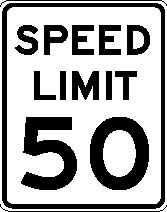
For all other vehicles, the maximum speed limit on most California highways is 65 mph. However, for 2-lane undivided highways, the maximum speed limit is 55 mph, unless a higher speed limit is posted. On some highways, the maximum speed limit is 70 mph, but only if there are signs posted showing 70 mph.
No person shall drive at such a slow speed as to impede or block normal and reasonable movement of traffic, except when reduced speed is necessary for safe operation, for compliance with the law, or when the size and weight of the vehicle or combination makes reduced speed unavoidable.
Right Lane Rule
Vehicles listed in CVC §22406 must be driven in the designated lane or lanes when signs are posted.
When no signs are posted, these vehicles must be driven in the right-hand traffic lane or as close as possible to the right edge or curb. On a divided highway with 4 or more traffic lanes in one direction, these vehicles may also be driven in the lane just to the left of the right-hand lane. When overtaking or passing another vehicle going in the same direction, drivers of such vehicles must use either: (1) the designated lane, (2) the lane just to the left of the right-hand lane, or (3) the right-hand traffic lane when such use is permitted.
Designated System Access
Designated system access does not apply to a driver who is either: (1) preparing for a left- or right-hand turn, (2) in the process of entering or exiting a highway, (3) driving in a lane other than the right-hand lane “to continue on the intended route.”
Buses, except school buses or trailer buses, may drive in any lane as long as they are not towing another vehicle.
Movement off or onto the designated system (freeways/highways) by larger trucks is allowed only at interchanges or exits, which have the following signs:
- Movement is allowed along signed routes to reach terminals. Terminals are locations where:
— Freight is consolidated.
— Full loads are off-loaded.
— Vehicle combinations are regularly maintained, stored, or manufactured.

- Movement is allowed up to 1 mile from the identified exit or entrances leading to or from specified highways to obtain:
— Food
— Fuel
— Lodging
— Repairs

Slow Vehicle Rule
On a 2-lane highway where passing is unsafe, a slow-moving vehicle with 5 or more vehicle behind it must turn off the roadway at the nearest place designated by signs as a turnout, or wherever sufficient area for a safe turnout exists, to let the following vehicles pass.
Hours of Service
You are required to comply with California’s driver hours of service regulations when you are involved in INTRAstate commerce. You are considered to be involved in intrastate commerce when you do not:
- Cross the state line.
- Transport cargo which originated from another state.
- Transport cargo destined outside of California.
- Transport any hazardous substance or waste (CFR, Title 49 §171.8).
Other Rules
You are required to comply with federal driver hours of service regulations when you are involved in INTERstate commerce. You are considered to be involved in interstate commerce when the cargo you transport:
- Originates out of state.
- Is destined out of state.
- Consists of hazardous substances or wastes (CFR, Title 49 §171.8).
- Any combination of the above.
Driver’s Record of Duty Status
CHP is authorized to develop additional safety and driving regulations (CVC §§34501 and 34501.2).
A driver’s record of duty status must be used to record all of the driver’s hours. Drivers of CMVs must be in compliance with the hours of service requirements of the CFR, Title 49 §395.8 and the California Code of Regulations (CCR), Title 13 §§1201–1213.
A driver’s record of duty status must be kept in duplicate by each driver and each co-driver while driving, on duty but not driving, or resting in a sleeper berth. The record of duty status must be presented for inspection immediately upon request by any authorized CHP employee, any regularly employed and salaried police officer, or deputy sheriff. There may be instances when you do not need to maintain a record of duty status.
| Hours of Service | ||
|---|---|---|
| Condition | FEDERAL (Interstate commerce) | CALIFORNIA (Intrastate Commerce) |
| Driving time | Hours of ServiceYou may not drive for more than 11 hours following 10 consecutive hours off duty. | ConditionYou may not drive for more than 12 hours following 10 consecutive hours off duty. |
| On duty time | Hours of ServiceYou may not drive beyond the 14th hour after coming on duty following 10 hours off duty. You may perform work, except for driving, after being on duty for 14 hours. | ConditionYou may not drive after having been on duty for 16 hours. You may perform work, except for driving, after being on duty for 16 hours. |
| Multiple day on duty time limitations | Hours of ServiceYou are not eligible to drive after having been on duty for 60 hours in a 7-day period. However, if a motor carrier has commercial motor vehicles operating 7 days a week, the driver is not eligible to drive after having been on duty for 70 hours in an 8-day period. A driver may restart a 7/8 consecutive day period after taking 34 or more consecutive hours off duty. | ConditionYou are not eligible to drive after having been on duty for 80 hours in any 8 consecutive day period or if transporting farm products after having been on duty 112 hours in any consecutive 8-day period. For truck drivers, any period of 8 consecutive days may end with the beginning of any off-duty period of 34 or more consecutive hours. |
| Off duty time | Hours of ServiceAfter driving for 11 hours or being on duty for 14 hours, you may not drive again until you have had 10 consecutive hours off duty. Exception: If the truck is equipped with a sleeper berth, these 10 hours may be broken up into 2 periods provided one is not less than 8 hours. | ConditionAfter driving for 12 hours or being on duty for 16 hours, you may not drive again until you have had 10 consecutive hours off duty. Exception: If the truck is equipped with a sleeper berth, these 10 hours may be broken up into 2 periods, provided one period is not less than 8 hours. |
| Adverse driving condition | Hours of ServiceYou may drive an additional 2 hours if you encounter adverse weather conditions which were not apparent at the start of the trip. | ConditionYou may drive an additional 2 hours if you encounter adverse weather conditions which were not apparent at the start of the trip. Regardless of the adverse conditions, you are not allowed to drive for more than 14 hours or after having been on duty more than 16 hours. |
| Hours of Service Note: The changes to hours of service (HOS) rules do not affect bus drivers, at this time. For up-to-date HOS rules, visit www.fmcsa.dot.gov or www.chp.ca.gov. | ||
| A driver is disqualified from operating a Commercial Motor Vehicle (CMV) if convicted of any of the following offenses while operating either a COMMERCIAL or NONCOMMERCIAL motor vehicle (non-CMV): | |||||
|---|---|---|---|---|---|
| A driver is disqualified from operating a Commercial Motor Vehicle (CMV) if convicted of any of the following offenses while operating either a COMMERCIAL or NONCOMMERCIAL motor vehicle (non-CMV):Offense | 1st conviction or DUI test refusal in CMV | 1st conviction or DUI test refusal in non-CMV | 1st conviction or DUI test refusal in CMV transporting Hazmat | 2nd conviction or DUI test refusal in separate incident of any of these offenses in CMV | 2nd conviction or DUI test refusal in separate incident of any of these offenses in non-CMV |
| A driver is disqualified from operating a Commercial Motor Vehicle (CMV) if convicted of any of the following offenses while operating either a COMMERCIAL or NONCOMMERCIAL motor vehicle (non-CMV):Under the influence of alcohol | 1 year | 1 year | 3 years | Life | Life |
| A driver is disqualified from operating a Commercial Motor Vehicle (CMV) if convicted of any of the following offenses while operating either a COMMERCIAL or NONCOMMERCIAL motor vehicle (non-CMV):Under the influence of controlled substance | 1 year | 1 year | 3 years | Life | Life |
| A driver is disqualified from operating a Commercial Motor Vehicle (CMV) if convicted of any of the following offenses while operating either a COMMERCIAL or NONCOMMERCIAL motor vehicle (non-CMV):BAC of 0.04% or higher while operating CMV | 1 year | Not applicable | 3 years | Life | Not applicable |
| A driver is disqualified from operating a Commercial Motor Vehicle (CMV) if convicted of any of the following offenses while operating either a COMMERCIAL or NONCOMMERCIAL motor vehicle (non-CMV):Refusing to take DUI test required by implied consent laws | 1 year | 1 year | 3 years | Life | Life |
| A driver is disqualified from operating a Commercial Motor Vehicle (CMV) if convicted of any of the following offenses while operating either a COMMERCIAL or NONCOMMERCIAL motor vehicle (non-CMV):Leaving the scene of an accident | 1 year | 1 year | 3 years | Life | Life |
| A driver is disqualified from operating a Commercial Motor Vehicle (CMV) if convicted of any of the following offenses while operating either a COMMERCIAL or NONCOMMERCIAL motor vehicle (non-CMV):Using vehicle in felony not involving a controlled substance | 1 year | 1 year | 3 years | Life | Life |
| A driver is disqualified from operating a Commercial Motor Vehicle (CMV) if convicted of any of the following offenses while operating either a COMMERCIAL or NONCOMMERCIAL motor vehicle (non-CMV):Driving CMV while DL is revoked, suspended, or canceled or when disqualified from operating a CMV | 1 year | Not applicable | 3 years | Life | Not applicable |
| A driver is disqualified from operating a Commercial Motor Vehicle (CMV) if convicted of any of the following offenses while operating either a COMMERCIAL or NONCOMMERCIAL motor vehicle (non-CMV):Negligent operation of CMV causing a fatality | 1 year | Not applicable | 3 years | Life | Not applicable |
| A driver is disqualified from operating a Commercial Motor Vehicle (CMV) if convicted of any of the following offenses while operating either a COMMERCIAL or NONCOMMERCIAL motor vehicle (non-CMV):Using vehicle in felony involving a controlled substance | Life | Life | Life | Life | Life |
| A driver is disqualified from operating a Commercial Motor Vehicle (CMV) if convicted of any of the following offenses while operating either a COMMERCIAL or NONCOMMERCIAL motor vehicle (non-CMV):Synopsis of Table 1 Section 383.51 Federal Motor Carrier Safety Administration | |||||
| A driver is disqualified from operating a Commercial Motor Vehicle (CMV) if convicted of any of the following SERIOUS offenses: | ||||
|---|---|---|---|---|
| Offense | 2nd conviction in separate incident within 3 years of any of these offenses in a CMV | 2nd conviction in separate incident within 3 years of any of these offenses in a non-CMV, if conviction results in revocation, cancellation, or suspension of all driving privileges | 3rd or subsequent conviction in separate incident within 3 years of any of these offenses in a CMV | 3rd or subsequent conviction in separate incident within 3 years of any of these offenses in a non-CMV, if conviction results in revocation, cancellation, or suspension of all driving privileges |
| A driver is disqualified from operating a Commercial Motor Vehicle (CMV) if convicted of any of the following SERIOUS offenses:Speeding 15 mph or more above the posted speed limit | Offense60 days | 2nd conviction in separate incident within 3 years of any of these offenses in a CMV60 days | 2nd conviction in separate incident within 3 years of any of these offenses in a non-CMV, if conviction results in revocation, cancellation, or suspension of all driving privileges120 days | 3rd or subsequent conviction in separate incident within 3 years of any of these offenses in a CMV120 days |
| A driver is disqualified from operating a Commercial Motor Vehicle (CMV) if convicted of any of the following SERIOUS offenses:Reckless driving | Offense60 days | 2nd conviction in separate incident within 3 years of any of these offenses in a CMV60 days | 2nd conviction in separate incident within 3 years of any of these offenses in a non-CMV, if conviction results in revocation, cancellation, or suspension of all driving privileges120 days | 3rd or subsequent conviction in separate incident within 3 years of any of these offenses in a CMV120 days |
| A driver is disqualified from operating a Commercial Motor Vehicle (CMV) if convicted of any of the following SERIOUS offenses:Making improper or erratic lane changes | Offense60 days | 2nd conviction in separate incident within 3 years of any of these offenses in a CMV60 days | 2nd conviction in separate incident within 3 years of any of these offenses in a non-CMV, if conviction results in revocation, cancellation, or suspension of all driving privileges120 days | 3rd or subsequent conviction in separate incident within 3 years of any of these offenses in a CMV120 days |
| A driver is disqualified from operating a Commercial Motor Vehicle (CMV) if convicted of any of the following SERIOUS offenses:Following too closely | Offense60 days | 2nd conviction in separate incident within 3 years of any of these offenses in a CMV60 days | 2nd conviction in separate incident within 3 years of any of these offenses in a non-CMV, if conviction results in revocation, cancellation, or suspension of all driving privileges120 days | 3rd or subsequent conviction in separate incident within 3 years of any of these offenses in a CMV120 days |
| A driver is disqualified from operating a Commercial Motor Vehicle (CMV) if convicted of any of the following SERIOUS offenses:Violating a traffic law which causes a fatal accident | Offense60 days | 2nd conviction in separate incident within 3 years of any of these offenses in a CMV60 days | 2nd conviction in separate incident within 3 years of any of these offenses in a non-CMV, if conviction results in revocation, cancellation, or suspension of all driving privileges120 days | 3rd or subsequent conviction in separate incident within 3 years of any of these offenses in a CMV120 days |
| A driver is disqualified from operating a Commercial Motor Vehicle (CMV) if convicted of any of the following SERIOUS offenses:Driving CMV without obtaining a CDL | Offense60 days | 2nd conviction in separate incident within 3 years of any of these offenses in a CMVNot applicable | 2nd conviction in separate incident within 3 years of any of these offenses in a non-CMV, if conviction results in revocation, cancellation, or suspension of all driving privileges120 days | 3rd or subsequent conviction in separate incident within 3 years of any of these offenses in a CMVNot applicable |
| A driver is disqualified from operating a Commercial Motor Vehicle (CMV) if convicted of any of the following SERIOUS offenses:Driving CMV without CDL in possession | Offense60 days | 2nd conviction in separate incident within 3 years of any of these offenses in a CMVNot applicable | 2nd conviction in separate incident within 3 years of any of these offenses in a non-CMV, if conviction results in revocation, cancellation, or suspension of all driving privileges120 days | 3rd or subsequent conviction in separate incident within 3 years of any of these offenses in a CMVNot applicable |
| A driver is disqualified from operating a Commercial Motor Vehicle (CMV) if convicted of any of the following SERIOUS offenses:Driving CMV without proper class CDL and/or endorsements | Offense60 days | 2nd conviction in separate incident within 3 years of any of these offenses in a CMVNot applicable | 2nd conviction in separate incident within 3 years of any of these offenses in a non-CMV, if conviction results in revocation, cancellation, or suspension of all driving privileges120 days | 3rd or subsequent conviction in separate incident within 3 years of any of these offenses in a CMVNot applicable |
| A driver is disqualified from operating a Commercial Motor Vehicle (CMV) if convicted of any of the following SERIOUS offenses:Synopsis Table 2 Section 383.51 Federal Motor Carrier Safety Administration | ||||
| A driver is disqualified from operating a Commercial Motor Vehicle (CMV) if convicted of any of the following RAILROAD HIGHWAY GRADE CROSSING offenses (either federal, state, or local): | |||
|---|---|---|---|
| A driver is disqualified from operating a Commercial Motor Vehicle (CMV) if convicted of any of the following RAILROAD HIGHWAY GRADE CROSSING offenses (either federal, state, or local):Offense | 1st conviction | 2nd conviction in separate incident within 3 years of any of these offenses | 3rd or subsequent conviction in separate incident within 3 years of any of these offenses |
| A driver is disqualified from operating a Commercial Motor Vehicle (CMV) if convicted of any of the following RAILROAD HIGHWAY GRADE CROSSING offenses (either federal, state, or local):Fails to slow down to check for approaching train.
NOTE: Regulations may not require the driver to stop. |
No less than 60 days | No less than 120 days | No less than 1 year |
| A driver is disqualified from operating a Commercial Motor Vehicle (CMV) if convicted of any of the following RAILROAD HIGHWAY GRADE CROSSING offenses (either federal, state, or local):Fails to stop before reaching the crossing if tracks are not clear.
NOTE: Regulations may not require the driver to stop. |
No less than 60 days | No less than 120 days | No less than 1 year |
| A driver is disqualified from operating a Commercial Motor Vehicle (CMV) if convicted of any of the following RAILROAD HIGHWAY GRADE CROSSING offenses (either federal, state, or local):Fails to stop before crossing the tracks.
NOTE: Regulations require the driver to stop. |
No less than 60 days | No less than 120 days | No less than 1 year |
| A driver is disqualified from operating a Commercial Motor Vehicle (CMV) if convicted of any of the following RAILROAD HIGHWAY GRADE CROSSING offenses (either federal, state, or local):Fails to allow enough space to completely cross the tracks without stopping. | No less than 60 days | No less than 120 days | No less than 1 year |
| A driver is disqualified from operating a Commercial Motor Vehicle (CMV) if convicted of any of the following RAILROAD HIGHWAY GRADE CROSSING offenses (either federal, state, or local):Fails to obey traffic device or directions from a railroad crossing guard | No less than 60 days | No less than 120 days | No less than 1 year |
| A driver is disqualified from operating a Commercial Motor Vehicle (CMV) if convicted of any of the following RAILROAD HIGHWAY GRADE CROSSING offenses (either federal, state, or local):Cannot cross tracks because of insufficient undercarriage clearance | No less than 60 days | No less than 120 days | No less than 1 year |
| A driver is disqualified from operating a Commercial Motor Vehicle (CMV) if convicted of any of the following RAILROAD HIGHWAY GRADE CROSSING offenses (either federal, state, or local):Synopsis of Table 3 Section 383.51 Federal Motor Carrier Safety Administration | |||
| A driver is disqualified from operating a Commercial Motor Vehicle (CMV) if convicted of any of the following OUT-OF-SERVICE orders: | |||
|---|---|---|---|
| A driver is disqualified from operating a Commercial Motor Vehicle (CMV) if convicted of any of the following OUT-OF-SERVICE orders:Offense | 1st conviction | 2nd conviction in separate incident within 10 years of any of these offenses | 3rd or subsequent conviction in separate incident within 10 years of any of these offenses |
| A driver is disqualified from operating a Commercial Motor Vehicle (CMV) if convicted of any of the following OUT-OF-SERVICE orders:Violates a driver or vehicle out-of-service order while transporting non-HazMat | No less than 90 days or more than 1 year | No less than 1 year or more than 5 years | No less than 3 years or more than 5 years |
| A driver is disqualified from operating a Commercial Motor Vehicle (CMV) if convicted of any of the following OUT-OF-SERVICE orders:Violates a driver or vehicle out-of-service order while transporting HazMat or 16 or more passengers, including the driver. | No less than 180 days or more than 2 years | No less that 3 years or more than 5 years | No less than 3 years or more than 5 years |
| A driver is disqualified from operating a Commercial Motor Vehicle (CMV) if convicted of any of the following OUT-OF-SERVICE orders:Synopsis of Table 4 Section 383.51 Federal Motor Carrier Safety Administration | |||
Accident Reporting
As of January 1, 2017, every driver involved in an accident which results in death, injury, or property damage over $1000 must report the accident on a Report of Traffic Accident Occurring in California (SR 1) form to DMV. Report forms are available at dmv.ca.gov, by calling CHP at (916) 657-6677 or DMV at 1-800-777-0133, and at DMV offices.
You (or your authorized representative) must submit the report within 10 days of the accident, whether you caused the accident or not, and even if the accident occurred on private property. The SR 1 is required in addition to any other report made to or by law enforcement or your insurance company if the accident resulted in any damage over $1000 and/or an injury or death. If you do not report the accident to DMV, your driving privilege will be suspended.
Note CDL holders may downgrade to a noncommercial DL during any mandatory suspension period in order to be eligible to obtain a restricted DL. In order to regain your CDL, all knowledge, skills tests, and fees will be required.
California law states that you must notify your employer within 5 days if you have an accident while driving your employer’s vehicle (CVC §16002). However, your employer may require you to notify them immediately.
Financial Responsibility (FR) Requirements
Motor Carriers of Property. Most CMVs transporting property are under the regulation of DMV, whose liability and property damage requirements are listed below. The following limits do not apply to pickup trucks as defined in CVC §471 and 2-axle daily rental trucks with a GVWR less than 26,001 pounds when operated in noncommercial use:
- Transporting general freight exclusively in vehicles having a GVWR of 10,000 pounds or less: $300,000 combined single limit.
- Transporting general freight in vehicles having a GVWR of 10,001 pounds or more: $750,000 combined single limit.
- Transporting petroleum products in bulk on the highways: $500,000 for injury or death of 1 person, $1,000,000 for injury or death to 2 or more persons, $200,000 for damage to property, or $1,200,000 combined single limit.
- Transporting oil, HazMat, or waste: $1,000,000. combined single limit.
- Transporting hazardous substances, compressed gas, liquefied compressed gas in cargo tanks, portable tanks, or hopper-type vehicles with capacities in excess of 3,500 water gallons, or transporting Division 1.1, 1.2, or 1.3 explosives, poison gas, or highway-route controlled quantities of radioactive materials: $5,000,000 combined single limit.
Information on transporting HazMat or wastes may be obtained from the Department of Toxic Substances Control (DTSC) and CHP.
Note Not all coverage requirements are listed in this section. For questions related to liability insurance for motor carriers, call the DMV Motor Carrier Permit Operations at (916) 657-8153.
FR may be maintained by one of the following:
- Certificate of Insurance (MC 65 M).
- Surety bond (MC 55 M).
- Certificate of Self Insurance Motor Carriers of Property (MC 131 M).
Motor carriers must maintain evidence of insurance on file during the active life of the permit. Whenever DMV determines that a motor carrier’s Certificate of Insurance or surety bond has expired or been cancelled, DMV will suspend the MCP. To avoid MCP suspension, contact your insurance provider to submit valid liability coverage.
Proof of FR
Drivers must show evidence of FR prior to the operation of the vehicle. Evidence is met if the vehicle displays exempt plates or is owned, leased by, or under the direction of the U.S. government.
1.5 – International Registration Plan and International Fuel Tax Agreement
If you operate a CDL-required vehicle in interstate commerce, the vehicle, with few exceptions, is required to be registered under the International Registration Plan (IRP) and the International Fuel Tax Agreement (IFTA). These federally mandated programs provide for the equitable collection and distribution of vehicle license fees and motor fuel taxes for vehicles traveling throughout the 48 contiguous U.S. and 10 Canadian provinces.
Under the IRP, jurisdictions must register apportioned vehicles, which includes issuing license plates and cab cards or proper credentials, calculating, collecting, and distributing IRP fees, auditing carriers for accuracy of reported distance and fees, and enforcing IRP requirements.
Registrant responsibilities under the plan include applying for IRP registration with base jurisdiction, providing proper documentation for registration, paying appropriate IRP registration fees, properly displaying registration credentials, maintaining accurate distance records, and making records available for jurisdiction review.
The basic concept behind IFTA is to allow a licensee (motor carrier) to license in a base jurisdiction for the reporting and payment of motor fuel use taxes.
Under IFTA, a licensee is issued one set of credentials, which authorizes operations through all IFTA member jurisdictions. The motor fuel use taxes collected pursuant to IFTA are calculated based on the number of miles (or kilometers) traveled and number of gallons (liters) consumed in the member jurisdictions. The licensee files one quarterly tax return with the base jurisdiction by which the licensee will report all operations through IFTA member jurisdictions.
It is the base jurisdiction’s responsibility to remit the taxes collected to other member jurisdictions and represent the other member jurisdictions in the tax collection process, including the performance of audits.
An IFTA licensee must retain records to support the information reported on the IFTA quarterly tax return.
The IRP registrant and IFTA licensee may be the vehicle owner or operator.
The requirement for acquiring IRP license plates for a vehicle and IFTA license for a motor carrier is determined by the definitions from the IRP and the IFTA for apportionable vehicle and qualified motor vehicle.
For the Purposes of IRP:
Apportionable vehicle means any power unit that is used, or intended for use, in two or more member jurisdictions for the transportation of persons for hire, or designed, used, or maintained primarily for the transportation of property, and at least one of the following:
- Has 2 axles and a gross vehicle weight (GVW) or registered GVW in excess of 26,000 pounds (11,793.401 kilograms).
- Has 3 or more axles, regardless of weight.
- Used in combination, when the GVW of such combination exceeds 26,000 pounds (11,793.401 kilograms).
A recreational vehicle, vehicle displaying restricted plates, bus used in the transportation of chartered parties, or government-owned vehicle is not an apportionable vehicle; except that a truck or truck tractor, power unit in a combination of vehicles having a GVW of 26,000 pounds (11,793.401 kilograms) or less, and bus used in the transportation of chartered parties, may be registered under IRP at the option of the registrant.
While similar, the “qualified motor vehicle” in IFTA means a motor vehicle used, designed, or maintained for transportation of persons or property and at least one of the following:
- Has 2 axles and a GVW or registered GVW exceeding 26,000 pounds (11,797 kilograms).
- Used in combination, when the weight of such combination exceeds 26,000 pounds (11,797 kilograms) GVW or registered GVW. Qualified motor vehicle does not include recreational vehicles.
- Has 3 or more axles, regardless of weight.
If the vehicle you operate is registered under IRP and you are motor carrier licensed under IFTA, you are required to comply with the mandatory record keeping requirements for operating the vehicle. A universally accepted method of capturing this information is through the completion of an Individual Vehicle Distance Record (IVDR), sometimes referred to as a Driver Trip Report. This document reflects the distance traveled and fuel purchased for a vehicle that operates interstate under apportioned (IRP) registration and IFTA fuel tax credentials.
Although the actual format of the IVDR may vary, the information that is required for proper record keeping does not.
In order to satisfy the requirements for IVDRs, these documents must include the following information:
Distance
Per Article IV of the IRP Plan:
- Date of trip (starting and ending).
- Trip origin and destination city and state or province.
- Route(s) of travel.
- Beginning and ending odometer or hub odometer reading of the trip.
- Total distance traveled.
- In-jurisdiction distance.
- Power unit number or vehicle identification number.
Fuel
Per Section P560 of the IFTA Procedures Manual:
.300 An acceptable receipt or invoice must include, but shall not be limited to, the following:
.005 Date of purchase.
.010 Seller’s name and address.
.015 Number of gallons or liters purchased.
.020 Fuel type.
.025 Price per gallon or liter or total amount of sale.
.030 Unit number or other unique vehicle identifier.
.035 Purchaser’s name.
An example of an IVDR completed in entirety for each trip can be found in Figure 1. An individual IVDR is filled out for each vehicle. The rules to follow when trying to determining how and when to log an odometer reading are the following:
- At the beginning of the day.
- When leaving the state or province.
- At the end of the trip/day.
Not only do the trips need to be logged, but the fuel purchases need to be documented as well. You must obtain a receipt for all fueling and include it with your completed IVDR.
Make sure that all trips that you enter are always filled out in descending order and that your trips include all state/provinces that you traveled through on your route.
There are different routes that a driver may take, and most of the miles may be within one state or province. Whether or not the distance you travel is primarily in one jurisdiction or spread among several jurisdictions, all information for the trip must be recorded. This includes the dates, the routes, odometer readings, and fuel purchases.
By completing the IVDR in full and keeping all records required by both the IRP and IFTA, you will ensure that you and your company are in compliance with all state and provincial laws surrounding fuel and distance record keeping requirements.
The IVDR serves as the source document for the calculation of fees and taxes that are payable to the jurisdictions in which the vehicle is operated, so these original records must be maintained for a minimum of 4 years.
In addition, these records are subject to audit by the taxing jurisdictions. Failure to maintain complete and accurate records could result in fines, penalties, and suspension or revocation of IRP registrations and IFTA licenses.
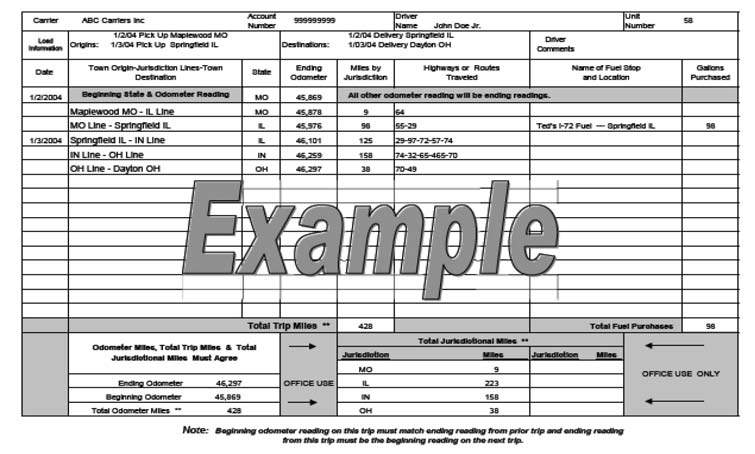
Figure 1
Individual Vehicle Mileage and Fuel Record (Example)
For additional information on the IRP and the requirements related to the IRP, contact your base jurisdiction motor vehicle department or IRP, Inc. (official repository for the IRP) by visiting IRP, Inc. at www.irponline.org. There is a record-keeping video on the website home page available in English, Spanish, and French. For additional information on IFTA and the requirements related to IFTA, contact the appropriate agency in your base jurisdiction. You will also find useful information about the agreement at the official repository of IFTA at iftach.org/index.php.
Definition of Terms
9.000 Definition of Terms (CVC §§9840, 9871.5 and CH&NC §651)
- Amphibious Vehicle—A vehicle/vessel combination by which any person or property may be propelled, moved, or drawn, both upon water and upon a highway on land.
- Documented Vessel—Any vessel which is documented by the U.S. Coast Guard and is issued a valid marine certificate. Some examples are any:
- Commercial vessel five net tons or more.
- Commercial vessel 30 feet or more in length (unless an exemption is granted by the U.S. Coast Guard).
- Yacht or pleasure vessel documented at the request of the owner.
- Interstate Commerce—A vessel engaged for compensation in transporting persons or property in more than one state.
- Legal Owner—A person holding the legal title to a vessel under a conditional sales contract; the mortgagee of a vessel; or the renter or lessor of a vessel to the state, or to any county, city, district, or political subdivision of the state, under a lease, lease sale, or rental purchase agreement which grants possession of the vessel to the lessee for a period of 30 consecutive days or more.
- Livery Vessel—Any vessel subject to registration under the California Vehicle Code that is held primarily for the purpose of renting, leasing, or chartering to others.
- Owner—A person having all the incidents of ownership, including the legal title of a vessel whether or not such person lends, rents, or pledges such vessel; the person entitled to the possession of a vessel as the purchaser under a conditional sale contract; or the mortgagor of a vessel.
- Personal Watercraft—A vessel less than 12 feet in length, propelled by machinery, that is designed to be operated by a person sitting, standing, or kneel ing on the vessel, rather than in the conventional manner of sitting or standing inside the vessel.
- Registered Owner—The person registered by Department of Motor Vehicles (DMV) as the owner of the vessel.
- Situs—Principal location of the vessel.
- State of Principal Use—The state on which waters a vessel is used or intended to be used most during a calendar year.
- True Full Name—True full name is the complete, exact name used on legal documents, such as a driver license, and includes a person’s first name/initial, middle name/initial, and last name. The name must be sufficient to ensure identification of the owner.
- Undocumented Vessel—Any vessel which is not required to have, and does not have, a valid marine document issued by the U.S. Coast Guard.
- Use of Waters—To navigate, operate, employ, or moor any vessel upon the waters of this state.
- Vessel—Includes every description of watercraft used, or capable of being used, as a means of transportation on water except a:
- Seaplane on water.
- Watercraft specifically designed to operate on a permanently fixed course, the movement of which is restricted to a fixed track or arm to which the watercraft is attached or by which the watercraft is controlled.
- Floating structure designed and built to be used as a stationary waterborne residential dwelling which:
Does not have, and is not designed to have, a mode of power of its own, is dependent for utilities upon a continuous utility linkage to a source originating on shore, and has a permanent, continuous hookup to a shoreside sewage system.
- Vessel Agent—A bona fide dealer, broker, or both, appointed, but not licensed, by DMV.
- Vessel Carrying Passengers for Hire—Any vessel subject to registration under the California Vehicle Code used for transportation of any person by such vessel for valuable consideration, whether directly or indirectly flowing to the owner, charterer, operator, agent, or any other person interested in the vessel.
- Vessel Dealer—A person who is engaged wholly or in part in the business of selling or offering for sale, buying, or taking in trade for the purpose of resale, or exchanging any vessel or vessels and receives, or expects to receive, money, profit, or any other thing of value. Vessel and marine dealers are not licensed by DMV. For questions regarding licenses for retail businesses selling vessels and related marine equipment, see your local city and county administrative offices and the State Board of Equalization.
- Vessel Manufacturer—A person who is engaged wholly or in part in the business of building or assembling vessels, who subsequently offers these vessels for sale and receives, or expects to receive, money, profit, or any other thing of value resulting from such transactions.
- Waters of the State—Any waters within the territorial limits of this state, including private water bodies.
- Yacht and Ship Broker—A person licensed by the Department of Boating and Waterways, who, for compensation, negotiates the purchase, sale, or exchange of yachts, and who does not own such yachts.
- Yacht or Ship—Any vessel 16 or more feet in length and under 300 gross tons used navigating in water and designed to be propelled by motor or sail.
- Dinghy—Small open boat carried on or towed by a larger boat or yacht; may be propelled by oars sails or an outboard motor.
- Life boat—One of the small boats carried by a ship for use if the ship must be abandoned.
Miscellaneous Information
8.000 Boating Safety Literature
There are more than 40 publications on boating safety that are available, at no cost, for distribution to the public by writing:
Department of Boating and Waterways
2000 Evergreen Street, Suite 100
Sacramento, CA 94815-3896
For a list of the current publications, check the Boating and Waterways website.
8.005 Change of Address (CVC §9865)
The Certificate of Ownership and Certificate of Number are not required to change or correct an address. When a change of address occurs, including change of vessel location, the owner must notify the Department of Motor Vehicles (DMV) within 15 days using the Notice of Change of Address (DMV 14) (PDF) form. The requirements for a change of address are.
- A DMV 14 (PDF) form completed and signed by the registered owner.
- Correction of the address on the Certificate of Number by lining out the old address and entering the new address. Return the certificate to the owner.
A new Certificate of Number is not issued.
8.010 Change or Correction of Name (CVC §9852)
For applicants requesting a change or correction of name, the following items are required:
- Certificate of Ownership with the correct name printed or typed in the “New Registered Owner” section on the back.
- Statement of Facts (REG 256) form completed to show the name change or correction to be made in Section H- Name Statement indicating the reason for the change and signed by the registered owner in Section K.
- Issue a no-fee Miscellaneous Receipt and Temporary Certificate of Number (BOAT 103) form.
A new Certificate of Ownership and Certificate of Number will be issued and mailed to the owner(s).
8.015 Duplicate Certificate of Number (CVC §9867)
There is a fee for the duplicate Certificate of Number if that is all that is being requested. The requirements for a duplicate Certificate of Number only are:
- An Application for Replacement Plates, Stickers, Documents (REG 156) from the owner. A mutilated or illegible Certificate of Number must be attached to the application.
- Collect the duplicate fee and any other fees due.
Note When the owner of record applies for a duplicate and indicates on the REG 156 form that the original was not received from the department, process as a “no fee” transaction.
8.020 Duplicate Certificate of Ownership (CVC §§9853.1, 9867, 9909)
The requirements for a duplicate Certificate of Ownership are:
- A properly completed Application for Duplicate or Paperless Title (REG 227).
- Disposition of the original title must be shown; a mutilated or illegible certificate must be attached to the application.
- Proper signatures.
- If there is no hull identification number (HIN), follow the instructions in Chapter 2 of this handbook.
- Collect the duplicate fee and any other fees due.
Note The basic transfer requirements apply when ownership is being transferred in conjunction with the duplicate ownership certificate application.
8.025 Historical Vessel Plaque (CVC §9853.5)
Historical Vessel Plaques are available to owners of wooden, power driven, pleasure crafts constructed prior to December 31, 1942.
A brass plaque is issued and may only be displayed on the vessel for which it is issued. Historical Vessel Plaques are not transferable. They are valid for the life of the vessel.
To obtain a Historical Vessel Plaque, have the applicant complete the Application for Historical Vessel Plaque (BOAT 100). The BOAT 100 form is available on the DMV website at www.dmv.ca.gov. Send the application with the fee (see Chapter 3 for fee) to:
Department of Motor Vehicles
Special Processing Unit, MS D238
PO Box 932345
Sacramento, CA 94232-34501
8.030 Incorrect Description of Vessel (CVC §9852)
Whenever the certificates do not properly describe a vessel, whether through error or because some major change may have been made to the vessel, the registration agent must obtain the following from the owner:
- The Certificate of Ownership.
- A completed Statement of Facts (REG 256) explaining the necessary corrections.
- Certificate of Number.
- No fee is required.
- Issue a BOAT 103 form.
- List the item on the ADM 173-1.
Note Valid ownership certificates exist that do not reflect the HIN of record. This occurs because the registered owner did not return the title to the department in 1978 when HINs were assigned to vessels without a number. When one of these ownership certificates is presented for a subsequent transaction, write the HIN on the certificate to reflect the one shown on the Certificate of Number.
| State | Address | Website/Phone & Fax Numbers |
|---|---|---|
| State AL—ALABAMA (nontitle state) | Address
Marine Police Division Department of Conservation & Natural Resources 64 N. Union St., Room 438 Montgomery, AL 36130-1451 |
www.dcnr.state.al.us (334) 242-3486 or Fax (334) 242-0336 |
| State AK—ALASKA (nontitle state) | Address
Boating Safety Division U.S. Coast Guard PO Box 25517j Juneau, AK 99802-55517 |
https://dnr.alaska.gov/parks/boating/ parks/boating (907) 463-2365 or Fax (907) 463-2299 |
| State AZ—ARIZONA (nontitle state) | Address
Game & Fish Department 2222 West Greenway Road Phoenix, AZ 85023 |
www.azgfd.gov (602) 942-3000 or Fax (602) 789-3729 |
| State AR—ARKANSAS (nontitle state) | Address
Arkansas Game & Fish Commission Boating Administration 2 Natural Resources Drive Little Rock, AR 72205 |
https://www.agfc.com/en/ (501) 223-6300 or 1-800-364-4263 or Fax (501) 223-6407 |
| State CL—COLORADO (nontitle state) | Address
Department of Natural Resources Division of Parks & Outdoor Recreation 13787 South Highway 85 Littleton, CO 80125 |
https://cdnr.us/#/division/CPW boating (303) 791-1954 or Fax (303) 470-0782 |
| State CT—CONNECTICUT (nontitle state) | Address
Department of Motor Vehicles Marine Vessel Section 60 State Street Wethersfield, CT 06161 |
https://portal.ct.gov/dmv?language=en_US (860) 263-5700 or Fax (860) 263-5555 |
| State DL—DELAWARE (nontitle state) | Address
Department of Natural Resources Division of Fish & Wildlife 89 Kings Hwy Dover, DE 19901 |
https://dnrec.delaware.gov/fish-wildlife/ (302) 739-9918 or Fax (302) 739-6157 |
| State
DC—DISTRICT OF COLUMBIA |
Address
Metropolitan Police Department Harbor Patrol 550 Water Street SW Washington, DC 20024 |
www.mpdc.dc.gov (202) 727-4582 or Fax (202) 727-3663 |
| State FL–FLORIDA | Address
Department of Highway Safety & Motor Vehicles Bureau of Vessel Titles & Registration Neil Kirkman Bldg., MS 74 2900 Apalachee Parkway Tallahassee, FL 32399 |
https://www.flhsmv.gov/motor-vehicles-tags-titles/vessels/ (850) 617-2301 or Fax (850) 487-7090 |
| State
GA—GEORGIA (nontitle state) |
Address
Department of Natural Resources Boating Registration Unit P.O. Box 934943 Atlanta, GA 31193 |
https://georgiawildlife.com/boating/registration 1-800-366-2661 or Fax (301) 687-8615 |
| State
HA—HAWAII (nontitle state) |
Address
Department of Land and Natural Resources Division of Boating & Ocean Recreation 333 Queen St., Suite 300 Honolulu, HI 96813 |
www.hawaii.gov/dlnr/dbor (808) 587-1966 or Fax (808) 587-1977 |
| State ID—IDAHO | Address
Department of Parks and Recreations Boating Program PO Box 83720 Boise, ID 83720-0065 |
www.parksandrecreation.idaho.gov (208) 344-4199 or Fax (208) 334-3741 |
| State IL—ILLINOIS | Address
Department of Natural Resources Office of Law Enforcement 524 South Second Street Springfield, IL 62702-1270 |
www.dnr.state.il.us (217) 557-0180 or Fax (217) 782-5016 |
| State IN—INDIANA | Address
Bureau of Motor Vehicles 100 N. Senate Ave., Rm N440 Indianapolis, IN 46204 |
www.in.gov/dnr (317) 232-2812 or Fax (317) 232-0236 |
| State IA—IOWA | Address
Department of Natural Resources Fish and Wildlife Division 502 E. Ninth St. Des Moines, IA 50319-0034 |
www.dnr.iowa.gov (515) 725-8200 or Fax (515) 725-8202 |
| State
KA—KANSAS (nontitle state) |
Address
Department of Wildlife & Parks 512 SE 25th Ave. Pratt, KS 67124 |
https://ksoutdoors.com/ (620) 672-5911 or Fax (620) 672-3013 |
| State KY—KENTUCKY | Address
Division of Motor Vehicle Title Branch PO Box 2014 Frankfort, KY 40602 |
www.fw.ky.gov (502) 564-5301 or Fax (502) 564-1686 |
| State
LA—LOUISIANA (nontitle state) |
Address
Department of Wildlife & Fisheries Motorboat Registration Section 2000 Quail Dr. Baton Rouge, LA 70808 |
www.wlf.louisiana.gov (225) 765-2887 or Fax (225) 763-5421 |
| State
ME—MAINE (nontitle state) |
Address
Department of Inland Fisheries and Wildlife Director of Licensing & Registration 284 State St. Augusta, ME 04333 |
https://www.maine.gov/ifw/. (207) 287-8000 or Fax (207) 287-8094 |
| State MD—MARYLAND | Address
Licensing & Registration Services Maryland Department of Natural Resources 1804 West Street, ste. 300 Annapolis, MD 214041 |
www.maryland.gov (410) 260-3220 or Fax (410) 260-8239 |
| State
MS— MASSACHUSETTS |
Address
Department of Fisheries & Wildlife Division of Law Enforcement 100 Cambridge St. Boston, MA 02202 |
https://www.mass.gov/orgs/division-of-fisheries-and-wildlife (617) 626-1500 or Fax (617) 626-1505 |
| State MC—MICHIGAN | Address
Department of State Vessel Registration 430 W. Allegan St. Lansing, MI 48918 |
www.michigan.gov/sos (517) 322-1460 or 1-888-767-6424 |
| State MN—MINNESOTA | Address
Department of Natural Resources License Bureau BOX 26 500 Lafayette Road Saint Paul, MN 55155-4020 |
www.dnr.state.mn.us (651) 296-6157 or Fax (651) 297-8851 |
| State
MI—MISSISSIPPI (titles are optional) |
Address
Mississippi Department of Wildlife, Fisheries, and Parks 2900 North State St. Jackson, MS 39216 |
www.mdwfp.com (601) 432-2400 or Fax (601) 364-2008 |
| State MO—MISSOURI | Address
Motor Vehicle Bureau 301 w. High Street Jefferson City, MO 65101-0100 |
www.dor.mo.gov (573) 526-3669 or Fax (573) 522-9295 |
| State MT—MONTANA | Address
Title and Registration Bureau Motor Vehicle Division 1003 Buckskin Dr. Deer Lodge, MT 59722 |
https://dojmt.gov/driving/vehicle-title-and-registration/ (406) 444-3661 or Fax (406) 846-6039 |
| State NB—NEBRASKA | Address
Nebraska Game & Parks Commission P.O. Box 30370 Lincoln, NE 68503 |
http://outdoornebraska.gov/ (402) 471-0641 or Fax (402) 471-5528 |
| State NV—NEVADA | Address
Nevada Division of Wildlife Boat Registration 1100 Valley Road Reno, NV 89512 |
www.ndow.org (775) 688-1506 or Fax (775) 688-1595 |
| State
NH—NEW HAMPSHIRE (nontitle state) |
Address
New Hampshire Department of Safety Division of Motor Vehicles 33 Hazen Drive Concord, NH 03305-0002 |
https://www.dmv.nh.gov/ (603) 271-3575 |
| State NJ—NEW JERSEY | Address
New Jersey Division of Motor Vehicles Vessel Titling and Registration PO BOX 160 Trenton, NJ 08666 |
www.state.nj.gov.mvc (609) 292-6500 |
| State NM—NEW MEXICO | Address
Vehicle Services Bureau Motor Vehicle Division PO Box 1028 Santa Fe, NM 87504-1028 |
www.state.nm.us 1-888-683-2821 or Fax (505) 827-0395 |
| State NY—NEW YORK | Address
Department of Motor Vehicles Bureau of Registration 6 Empire State Plaza Albany, NY 12228 |
www.nydmv.state.ny.us (518) 486-9786 or Fax (518) 473-1930 |
| State
NC—NORTH CAROLINA (titles are optional) |
Address
North Carolina Wildlife Resources Commission 512 N. Salisbury St. Raleigh, NC 27604-1188 |
www.state.nc.us/wildlife (919) 707-0010 or Fax (919) 733-7083 |
| State
ND—NORTH DAKOTA (nontitle state) |
Address
North Dakota Game & Fish Department 100 N. Bismarck Expressway Bismarck, ND 58501-5095 |
www.gf.nd.gov (701) 328-6300 or Fax (701) 328-6352 |
| State OH—OHIO | Address
Department of Natural Resources Division of Watercraft 2045 Morse Rd Bldg A Columbus, OH 43229-6693 |
www.dnr.state.oh.us/watercraft (614) 265-6480 or Fax (614) 261-8407 |
| State OK—OKLAHOMA | Address
Boat & Motor Division OTC MVD 2501 North Lincoln Oklahoma City, OK 73194 |
www.dps.state.ok.us (405) 521-2830 or Fax (405) 521-3826 |
| State OR—OREGON | Address
State Marine Board 435 Commercial St. NE, #400 PO BOX 14145 Salem, OR 97309-5065 |
https://www.oregon.gov/osmb/Pages/index.aspx. (503) 373-8587 or Fax (503) 378-4597 |
| State
PA— PENNSYLVANIA |
Address
Pennsylvania Fish and Boat Commission Boating Registration & Licensing Division PO Box 67000 Harrisburg, PA 17106-7000 |
https://www.fishandboat.com/Boat/RegisterTitle/Pages/default.aspx (717) 705-7800 or 1-866-262-8734 or Fax (717) 657-4449 |
| State RI—RHODE ISLAND | Address
Department of Environmental Management Division of Business Affairs 235 Promenade Rm 250 Providence, RI 02903 |
http://www.dem.ri.gov/ (401) 222-6800 or Fax (401) 423-1925 |
| State
SC—SOUTH CAROLINA |
Address
Department of Natural Resources Enforcement & Education Affairs 1000 Assembly Street Rm 104 Columbia, SC 29202 |
https://www.dnr.sc.gov/boating.html (803) 734-3857 or Fax (803) 734-4086 |
| State
SD—SOUTH DAKOTA |
Address
Division of Game, Fish, & Parks Division of Motor Vehicles 523 E. Capitol Avenue Pierre, SD 57501-3182 |
https://gfp.sd.gov/ (605) 223-7660 or Fax (605) 773-4117 |
| State
TN—TENNESSEE (nontitle state) |
Address
Tennessee Wildlife Resources Agency Boating Division PO Box 40747 Nashville, TN 37204 |
https://www.tn.gov/twra.html (615) 781-6500 or Fax (615) 781-6551 |
| State TX—TEXAS | Address
Texas Parks & Wildlife Department 4200 Smith School Road Austin, TX 78744 |
www.tpwd.state.tx.us (512) 389-4800 or 1-800-792-1112 or Fax (512) 389-4814 |
| State UT—UTAH | Address
Department of Parks & Recreation 1636 W. North Temple St. Salt Lake City, UT 84116 |
https://stateparks.utah.gov/. (801) 538-7220 or Fax (801) 883-8757 |
| State VT—VERMONT | Address
Department of Motor Vehicles 109 State Street Montpelier, VT 05602 |
https://dmv.vermont.gov/ (802) 828-2070 or Fax (802) 297-7697 |
| State VA—VIRGINIA | Address
Department of Game & Inland Fisheries PO Box 11104, 4010 W. Broad St. Richmond, VA 23230-1528 |
www.dgif.state.va.us/boating (804) 367-1000 or Fax (804) 367-9147 |
| State WN—WASHINGTON | Address
Department of Licensing Vessel Licensing PO Box 42654 Olympia, WA 98504-2654 |
www.boat-ed.com/wa (360) 902-3770 or Fax (360) 902-4089 |
| State
WV—WEST VIRGINIA |
Address
Division of Motor Vehicles Capitol Complex, Bldg. 3 1800 Kanawha Boulevard East Charleston, WV 25317 |
www.wvdot.com (304) 558-3900 |
| State WS—WISCONSIN | Address
Department of Natural Resources Licensing and Registration Section 124 S. Webster St., PO Box 7921 Madison, WI 53707-7921 |
https://dnr.wi.gov/ (608) 266-2621 or Fax (608) 261-4380 |
| State
WY—WYOMING (nontitle state) |
Address
Wyoming Game & Fish Department Watercraft Section 5400 Bishop Boulevard Cheyenne, WY 82006-0001 |
www.gf.state.wy.us (307) 777-4600 |
8.040 Stolen Vessels
Stolen or embezzled vessels must be reported to the appropriate law enforcement agency, which will report the loss or theft to the Department of Justice (DOJ). The DOJ immediately notifies the DMV of the reported theft or embezzlement. This will cause the vessel file to be flagged.
Recovery of a stolen or embezzled vessel must be reported immediately to a law enforcement agency which will then notify DOJ. When authorization is received from the DOJ, the flag will be removed from the vessel file.
8.045 Substitute Sticker (CVC §9853.4)
The clearance requirements for issuance of a substitute sticker are:
- An Application for Replacement Plates, Stickers, Documents (REG 156) from the owner showing disposition of the original sticker. A mutilated or illegible sticker must be attached to the application.
- Collect the substitute sticker fee. If the owner indicates the original sticker was not received from the department, process as a “no fee” transaction.
Accounting Procedures
7.000 Applications Returned
Incomplete or inaccurate applications will be handled in the following manner:
- Applications requiring correction or additional documents will be returned to the agent along with a receipt for the fees collected.
- The second copy (canary) of the ADM 173-1 will be returned to the agent with incomplete application(s) and receipts. (Reconcile your agent copy of the transmittal with the returned copy.)
When the necessary requirements have been met, record the application on your current ADM 173-1. If the amount of the receipt matches the “total amount” on the application, no other fees are required for the item.
Enter the:
- Amount in Credit Media Column (3)
- Receipt number (office number, date, cashier and sequence numbers) in the Office Key Credit Column (5).
7.005 Transmittal of Vessel Registration Applications (ADM 173-1)
ADM 173-1 is the document used to record transactions involving receipt of funds. Use a black ballpoint pen for completing this form. List all accountable items issued in numerical order. When processing a transaction, make the entry immediately after the receipt has been written.
Instructions for entries on ADM 173-1:
- Enter the CF number, or, if a new vessel, enter the hull identification number (HIN) or last name of the registered owner.
- Enter the amount of cash, check, or credit media collected in Columns 1, 2, or 3. Do not make an entry in the credit media Column (3), unless you are returning an application with a credit receipt. Enter the amount that appears in the “total” area of credit receipt. In the Office Key Credit Column (5), enter the credit receipt number (office number, date, cashier number, and sequence).
- Enter the sticker number issued in the Current Sticker Column (6).
- Enter miscellaneous receipts issued (transfer, duplicate, etc.) in the Commercial Plate Column (8).
- Use the “Other” Column (11) in December to list next year renewal sticker numbers. Do not list current year stickers in this column.
- Enter the CF number for an original application in the Boat 102 Column (13).
Submit transmittal document weekly. Send the first three copies to the department with the applications, any documents, and a check or money order payable to DMV. Retain the quadruplicate (goldenrod) for your records.
If there have been no transactions during the week, submit a ADM 173-1 indicating: “No transactions during the week of xx/xx/xx.”
Distribution of Transmittal of Vessel Registration Applications:
- Original-Control Cashier (white).
- Duplicate- Extra copy (canary).
- Triplicate-Extra copy (pink).
- Quadruplicate-Agent copy (goldenrod).
7.010 Transmittal of Vessel Registration Application
Renewal
6.000 Application of Stickers
It is recommended that each applicant be advised to remove the old sticker from each side of the vessel. The new stickers contain instructions on the reverse side for proper application.
6.005 Biennial Renewal (CVC §9861)
Vessel registration expires on December 31 of every odd-numbered year and must be renewed on or before midnight of that date to avoid a 50 percent penalty. Renewal billing notices are mailed approximately two months before the expiration date. A vessel must be located in California to be renewed. A certificate of nonoperation (CNO) is not acceptable for vessels. The biennial renewal fee is due in addition to any other fees due on original/transfer applications submitted within 30 days of the expiration date. A new application and registration fee must be submitted for any dealer or manufacturer vessel number that is not renewed prior to midnight of the expiration date. A CNO is not acceptable.
6.010 Certificate of Non-Operation (REG 102) Form
A Certificate of Non-Operation (REG 102) form cannot be accepted for vessels. A Statement of Facts (REG 256) form is required if the vessel has been in dealer inventory.
6.015 Fee-Exempt Vessel Renewals
Fee-exempt renewals are processed the same as regular renewals, except no fees are due.
Fee-exempt vessels are identified by the two-letter suffix in the CF numbers as follows:
- LC—Government owned livery.
- XS—Owned by the federal government.
- XS—State owned.
- YB—Owned by a youth group.
- XC—Owned by a city, county, district, or other municipality.
For information on fee-exempt special numbers (see Chapter 2 of this handbook).
6.020 Receipt of Renewal Stickers
Upon receipt of renewal stickers, verify the numbers with the Notice of Transfer of Accountable or Controlled Items (ADM 518), sign the white copy, and return it to:
Department of Motor Vehicles
Occupational Licensing, MS L224
PO Box 932342
Sacramento, CA 94232-3420
After December 31, list on the REG 256 the beginning and ending numbers of the previous year stickers on hand. Send the REG 256 to the Occupational Licensing Unit and destroy the old stickers.
6.025 Renewal With a Renewal Billing Notice (CVC §9860)
To renew registration using a renewal billing notice, complete the following:
- Verify that the address shown on the notice is correct. If there is a change of residence or vessel location (the vessel must be located in California), print the new address directly below the old address, and line out the old address in the appropriate section.
- Collect the amount shown on the billing notice.
- Issue a Miscellaneous Receipt and Temporary Certificate of Number (BOAT 103).
- Issue a Vessel Sticker (BOAT 104). Verify the serial number of the new stickers to be issued. Log the sticker number and the vessel CF number in the appropriate spaces on the BOAT 103.
- Give the applicant the stickers and the white copy of the BOAT 103.
- Log the information on the Transmittal of Vessel Registration Application (ADM 173-1).
- Staple the pink copy of the BOAT 103 to the application.
Note It is imperative that receipts and stickers be issued in sequence, because these are accountable items.
6.030 Renewal Without a Renewal Billing Notice
If the applicant does not have the renewal billing notice, renewal may be completed as follows:
- Obtain the Certificate of Number (or a photocopy) for the last year of registration.
- Collect the renewal fee (see Chapter 3, Vessel Registration Fees and Use Tax).
- Issue a BOAT 103.
- Issue a BOAT 104 verify the serial number of the new stickers to be issued. Log the sticker number and the vessel CF number in the appropriate spaces of the BOAT 103.
- Give the applicant the stickers and the white copy of the BOAT 103.
- Log the information on the ADM 173-1.
- Staple the pink copy of the BOAT 103 to the old Certificate of Number.
Some applicants may not have received the prior year California Certificate of Number or a renewal billing notice, although they may have last year’s registration sticker on their vessel. This may be due to:
- An old address on the database.
- The transaction is being held in the incomplete correspondence file in DMV awaiting additional clearance from the applicant.
When applicants have not received the prior year certificate of number or a renewal billing notice, call DMV Vessel Unit at (916) 657-7104.
6.035 Vessels with Delinquent Property Taxes (CVC §§9880, 9900; CR&TC §§227, 3205; CH&NC §503)
DMV shall not renew or transfer title to or interest in a vessel if the county tax collector has notified DMV that taxes for the vessel are delinquent.
After the delinquent taxes have been paid or the delinquency is otherwise satisfied, the county tax collector will either issue a Vessel Tax Disposition (BOAT 120) form to the vessel owner or update the vessel’s record at DMV and remove the vessel tax hold. The vessel registration can then be renewed.
Transfers
5.000 Introduction
An Application For Duplicate or Paperless Title (REG 227) fom must be completed to effect the transfer. A transfer fee and use tax are due upon purchase. A transfer penalty is due if the transfer fee was not paid within 30 days of transfer (see Chapter 3, Vessel Registration Fees and Use Tax).
Note Vessel agents are required to supply new vessel owners with the ABCs of California Boating booklet (see Chapter 2 of this handbook).
5.005 Application for Transfer With Duplicate California Certificate of Ownership (CVC §§9909, 9917)
To apply for a transfer of ownership when the original California Certificate of Ownership is lost, stolen, illegible, mutilated, or has not been received by the owner of record, complete a REG 227 form following the instructions on the form.
In addition the following may be required:
- If mutilated or illegible, the title must be attached to the application.
- A bill of sale is acceptable in lieu of a releasing signature in Section 4.
- A legal owner of record release of owernship and /or interest must be notarized a Lien Satisfied/Legal Owner/Title Holder Release (REG 166) form cannot be used in lieu of the notarized lien holder’s release in Section 5.
- The lienholder information or the word, “None,” (if there is no new lienholder) must appear in Section 7.
- An Electronic Lien and Title (ELT) lienholder’s name and address must be shown exactly as shown in the latest ELT listing issued by the department. Listings are issued quarterly in a Vehicle Industry News (VIN) memo.
Note In November 1989, the department began issuing electronic or “paperless” titles. Used vessels and vehicles may be transferred with a paperless (electronic) title. If this is the case, a REG 227 form is required to complete a transfer; however, there is no fee for a duplicate.
5.010 Bankruptcy Sales (CVC §9915)
In addition to basic transfer requirements, the following items are required for bankruptcy sales:
- A certified copy of the trustee’s bond, court order appointing a receiver, or a court order confirming the sale of the vessel to the applicant. When the signature of the bankrupt individual or company representative is required, obtain the signature of the trustee or receiver.
- New vessels belonging to a bankrupt California vessel dealer may be cleared on an invoice or an Application for Registration Number, Certificate of Ownership, and Certificate of Number for Undocumented Vessel (BOAT 101) form with accompanying Vehicle/Vessel Transfer and Reassignment Form (REG 262) or Bill of Sale (REG 135) form as needed, to establish the chain of ownership.
5.015 Change From Exempt or Livery to Pleasure
When a livery or fee exempt vessel is transferred to an owner not qualified for the special number, a pleasure number is issued. When changing from an exempt or livery number to a pleasure number, complete the basic transfer requirements and:
- Obtain a Statement of Facts (REG 256) form signed by the new owner stating that the vessel will be used for pleasure only.
- Collect a transfer fee and renewal fee if due (see Chapter 3, Vessel Registration Fees and Use Tax).
- Issue a new Permanent Vessel Number and Temporary Certificate of Number (BOAT 102). Instruct the applicant to remove the old number and affix the new number to the vessel bow.
5.020 Completing California Certificate of Ownership for Transfer (CVC §§9900-9908)
In 1989, California began issuing a rainbow California Certificate of Ownership. The rainbow title is multi-colored (green, yellow, and pink) and is 8” x 7” in size. In 2004, the vessel title color changed to green. Older (4” x 5”) titles, also called “pink slips,” are still valid. When a California Certificate of Ownership is received, compare the hull identification number (HIN) with the California Certificate of Ownership to ensure it agrees. Follow the number references to complete the endorsements on the California Certificate of Ownership.
Follow the number references to complete the endorsements on the California Certificate of Ownership.
| Front of Title | |
|---|---|
| Front of TitleLines 1a & 1b | Secure the release of the registered owner(s)The signature must be on or above line 1a. A co-owner signs on line 1b. When multiple names are joined by “AND” (DMV keys “AND” as a slash mark “/”), all must sign to release ownership. When joined by “OR” or “AND/OR” (/or) any one of the listed owners may release.A company, public agency, or business name must be countersigned by an authorized representative. Example: SPEEDY VESSEL SALES The following is required: Speedy Vessel Sales by D. CollinsAn individual doing business as (DBA) Example: JOHN SMITH DBA SMITH VESSEL SALES The following is required: John Smith or John Smith DBA Smith Vessel SalesRelease for Trust: The release signature for a trust must contain the name of the trust and the countersignature of a trustee. Example: John Jones Family Trust by Mary S. Jones, Trustee.When a signature appears contrary to the printed name, have the customer complete a Statement of Facts (REG 256) (PDF) form to support the signature. Example: Dave R. Jones signs as Bobby Jones (Bobby Jones). The REG 256 form should indicate the true full name as David Robert Jones and the customer uses “Bobby Jones.”A bill of sale is acceptable in lieu of a signature on line1. Write B/S on line 1. |
| Front of TitleDate | Print or type the date the registered owner released interest in the vessel. |
| Front of TitleLine 2 | On line 2, the signature releases interest by the legal owner/lienholder of record, if any. A releasing signature for a company or business must contain the company or business name and the initials or signature of an authorized representative of the company. A signature is required for a lienholder who is an individual. A Lien Satisfied/Legal Owner/Title Holder Release (REG 166) form is acceptable in lieu of the signature on line 2. (Print “LS” on line 2.) If the legal owner/lienholder is to remain the same for the new owner, release on line 2 is not mandatory. (The name and address of the legal owner/lienholder must be reentered on the back of the ownership certificate in this case). |
| Front of TitleRelease Date | Date the lienholder released interest in the vessel. |
| Back of Title | |
|---|---|
| Back of TitleLines 3a & 3b | Print or type the true full name (s) of the purchaser(s). See Chapter 9 for true full name definition.Check the appropriate indicator box “AND” or “OR” if registered to co-owners, and enter the purchase date. If a box is not checked, the names will be joined by “AND” on the new certificate.The purchase price and date must be entered on the designated lines. If acquired as a gift, the current value and date acquired must be entered. |
| Back of TitleLine 4 | Print or type the complete mailing address, including apartment or space number, when appropriate. Do not abbreviate street name. |
| Back of TitleLine 5a | Print or type city, two letters of the state, and zip code. Do not abbreviate city names. |
| Back of TitleLine 5b | County of residence. |
| Back of TitleLine 6a & 6b | Date of purchase and price. |
| Back of TitleLine 6c | State of Principal Use-Write the state where the vessel is principally on the waters for most of the calendar year. |
| Back of TitleLine 7a & 7c | Location (situs) where the vessel is primarily kept must be entered. |
| Back of TitleLine 8a & 8b | Date and written signature(s) of the new registered owner(s). If more than one purchaser, all must sign. The “usual” signature for each owner is acceptable. (Signature may be by power of attorney, which must be submitted as part of the application). |
| Back of TitleLines 9-11 | Write or print the name and address of the legal owner (lienholder), if any, and the initials of the person making the entry. This includes transfer of the registered owner when the legal owner/lienholder remains the same. Rubber stamps must be a minimum of 12 points. The impression must be clear and legible. If there is no legal owner, write the word “None” and initial. Omission of this information will cause the application to be returned as incomplete. |
| Back of TitleLine 12-14 | California Certificate of ownership reassignments by vessel dealers.The vessel agent’s signature and agent number must be entered and a Vessel Dealer or Manufacturer’s Sales Tax Certification (BOAT 110) must be submitted with the application.Vessel dealer’s name, countersignature, Board of Equalization seller’s permit number, and date of release (or sale).Endorsement by the second dealer, if applicable.If there are more than two, the other dealer names must be shown below or in any other available space (except legal owner area).Give the customer the ABCs of California Boating booklet and one set of Vessel Carbon Monoxide Warning Stickers and the companion brochure. |
Note Notice of Transfer and Release of Liability (REG 138) form, see Chapter 1.
5.025 Divorce and Quiet Title Judgments (CVC §9915)
Basic transfer requirements are required for divorce and quiet title judgments. The signature of the prior registered owner is not required for release of ownership. A certified copy of the Judgment of Dissolution is required. The judgment must include a full description of the vessel and indicate to whom it was awarded. If the full description is not shown on the document, obtain a Statement of Facts (REG 256) form from the applicant, stating the vessel mentioned in the judgment is the only vessel awarded to the applicant.
Note Certifications on any court judgment or decree must be made by the court clerk.
5.030 Involuntary Transfers (CVC §9915)
An involuntary transfer occurs when the owner’s or legal owner’s title/interest in a vessel passes without that owner’s voluntary release. This includes, but is not limited to, the following:
- Repossession
- Lien Sale
- Divorce and Quiet Title Judgment
- Bankruptcy Sales.
5.035 Legal Owner Transfers (CVC §9906-9907)
Submit a change of legal owner only on a Certificate of Ownership properly endorsed by the lienholder of record. A Lien Satisfied/Legal Owner/Title Holder Release (REG 166) form is acceptable in lieu of the legal owner’s release on the Certificate of Ownership. Collect the transfer fee (see Chapter 3, for fees).
5.040 Multiple Transfers
A multiple transfer involves at least two transfers, one of which was not recorded with DMV. A transfer fee is due for all transfers, including the unrecorded transfers. Multiple transfers require the following in addition to basic transfer documents:
- A releasing signature on the California Certificate of Ownership. Print the names of each buyer. The last buyer(s) must sign the back of the California Certificate of Ownership.
- Bill(s) of sale to complete the chain of ownership from the first buyer to the second buyer, the second buyer to the third, etc.
- A Statement to Record Ownership/Statement of Error or Erasure (REG 101) form for this current owner’s name. It must clearly indicate the true full name(s) of the registered and lienholder name(s) and address(es).
- When any signature appears in the legal owner section in error, a REG 101 form signed by the person making the error, must accompany the application to clarify intentions.
- If a lienholder was indicated by a previous buyer, a REG 166 from that lienholder is required.
- A transfer fee is due for each change of ownership from one party to another except: to, from, or between dealers, unless the vessel is to be registered in the name of a dealer. (Only the last transfer is subject to a transfer penalty for late submission.)
Example I:
Tom Smith trades in a boat to Dave’s Boat World. Dave’s sells it to T. Jones. A single transfer fee is due.
Example II:
Jerry Johnson trades in a boat to Dave’s Boat World. Dave’s sells it to All-American Vessels; it is then sold to D. Allen. A single transfer fee is due.
Example III:
John Thomas sells a boat to Dave Smith. Dave sells it to Mary Jones; it is then transferred to American Boats. Two transfer fees are due.
Example IV:
Jerry Smith sells a boat to Tom Anderson. Tom sells it to George Brown. George sells it to All-American Vessels; it is then sold to Barry’s Boats. Three transfer fees are due.
Note Collect use tax for the current owner only. If the separate price/value is not known on a vessel/trailer combination purchase, collect $1 use tax on the trailer and the remaining tax on the vessel.
5.045 Proof of Ownership (CCR §190.2 and CVC §9852)
The following are acceptable proof of vessel ownership:
- A bill of sale or Certificate of Sale completed by the seller showing the name and address of the seller, purchaser, and legal owner, if any, the location and date of sale, and a description of the vessel.
- A properly endorsed California Certificate of Ownership or out of state title.
- A Certificate of Origin, Bill of Lading, or invoice is required from any dealer. A bond may be required when proof of ownership cannot be established for vessels valued at $2,000 or more.
5.050 Revived Junk
Revived junks are processed as original registrations including:
- An Application for Registration Number, Certificate of Ownership, and Certificate of Number for Undocumented Vessel (BOAT 101) form.
- A bill of sale from the person who reported the vessel as junked and any other bills of sale to establish a chain of ownership. A bond may be required if a complete chain of ownership cannot be provided and the vessel is valued at $2,000 or more.
- The HIN or Statement of Facts (REG 256) form if there is not a HIN on the vessel.
- A REG 256 form explaining the condition of the vessel.
- Collection of the original registration fee and issuance of a CF number.
Give the ABCs of California Boating booklet to the new owner. Advise the applicant to remove any old numbers on the vessel and affix the new HIN numbers supplied by headquarters as indicated in the ABCs booklet and on the DMV website.
5.055 Transfer of Amphibious Vehicle/Vessel Combinations (CVC§9872.5)
The requirements to transfer amphibious vehicle/vessels with dual registration are as follows:
Separate applications are required.
- Vehicle (On or Off-Highway)
In addition to the usual vehicle transfer requirements and fees, enter the vessel CF number in upper left corner of the California Certificate of Ownership. - Vessel
In addition to the usual vessel transfer requirements and fees:
- Enter the vehicle license number in the upper left-hand corner of the vessel Certificate of Number (CN) and cross out the former owner information.
- Give the applicant the ABCs of California Boating booklet.
The requirements to transfer and convert from dual registration to vessel registration only are:
- An Application for Registration Number, Certificate of Ownership, and Certificate of Number for Undocumented Vessel (BOAT 101) completed by the new owner.
- The properly endorsed Certificate of Ownership (Title) and supporting transfer documents.
- A Statement of Facts (REG 256) form completed by the applicant stating the amphibian will not be used on or off-highway.
- The automobile plates (pick up and destroy the plates.)
- Collection of any fees due and issuance to the applicant of an ABCs of California Boating booklet.
The requirements to transfer and convert from dual registration to vehicle only registration are:
- The properly endorsed California Certificate of Ownership with supporting transfer documents.
- A REG 256 form completed by the applicant stating the amphibian will no longer be used on the waters of this state.
- Instruct the customer to remove the CF number from the amphibian.
Note When dual registration is converted to one type of registration only, the record will be marked at DMV headquarters, to prevent future billing notices or revenue collection letters.
5.060 Transfer of a Salvaged Vessel
A Salvage Certificate is not issued or required for a salvaged vessel. The basic transfer requirements apply to a vessel salvaged or sold by an insurance company. Process the transfer application as usual, except:
| If | Then the Requirements Are |
|---|---|
| IfThe title was previously surrendered to the California DMV | Then the Requirements AreAn Application for Duplicate or Paperless Title (REG 227) (PDF) form endorsed for transfer. A Statement of Facts (REG 256) (PDF) form explaining the title was previously surrendered to DMV. Two transfer fees in addition to any other fees due. A duplicate title fee is not due. |
| IfThe title is lost or missing | Then the Requirements AreAn REG 227 form endorsed for transfer. Collect the duplicate title fee and any other fees due. |
Note Within 15 days of a vessel being wrecked, dismantled, destroyed, or abandoned, the California Certificate of Ownership showing the vessel’s disposition must be submitted to DMV.
5.065 Transfer on Death Beneficiary (CVC §§9852.7, 9916.5)
The registered owner of a vessel may designate a transfer on death (TOD) beneficiary to whom ownership of the vessel may be transferred upon death of the owner. The TOD beneficiary is not a registered owner, and the signature or consent of the beneficiary is not required for any transaction involving the vessel during the lifetime of the registered owner.
Only one registered owner and one designated TOD beneficiary can be shown on the vessel title. The TOD beneficiary may be an individual, corporation, trust, partnership, association, or other entity. The fee to add, delete, or change a beneficiary is due in addition to any other fees (see Chapter 3, Vessel Registration Fees and Use Tax).
Transfer of Ownership to Beneficiary
Upon the death of the registered owner, ownership may be transferred to the TOD beneficiary. The requirements are:
- The vessel title. The beneficiary must sign the name of the registered owner and countersign on Line 1.
- A REG 256 form completed by the beneficiary, stating the date and place of the owner’s death and that he/she is entitled to the vessel as the designated beneficiary.
- Ownership may be transferred to another person. The beneficiary must give the buyer the above documents and a bill of sale; two transfer fees are due.
Note Only one registered owner and one designated TOD beneficiary can be shown on the vessel title.
5.070 Transfer of Repossessed Vessel (CVC §9915)
Basic transfer requirements must be met for a repossessed vessel. In addition, the following are required:
- Enter the word “repo” on line 1 of the Certificate of Ownership. line 2 must be released by the legal owner of record.
- Obtain a Certificate of Repossession (REG 119) form from the legal owner, including the bill of sale portion from the legal owner to the dealer.
- Complete a Vehicle/Vessel Transfer and Reassignment Form (REG 262) or Bill of Sale (REG 135) form from the dealer to the buyer, unless the vessel is being registered to the dealer.
- Collect the repossession fee and the transfer fee (see Chapter 3, for fees).
- Issue a Miscellaneous Receipt and Temporary Certificate of Number (BOAT 103).
5.075 Transfers with Letters of Administration or Letters Testamentary (CVC §5909)
The basic transfer requirements apply with Letters of Administration, except:
- The California Certificate of Ownership must be signed for the deceased owner and counter signed by the administrator or administratrix.
Example: Lynn Smith, Administratrix of Estate of Richard Roe - The original, certified copy, or photocopy (of certified copies) of Letters of Administration must accompany the transfer application. Letters of Administration issued by an out-of-state court are acceptable.
Do not accept appointment papers unless they are certified to be a true copy by a clerk of the court. Any other entries on the documents, such as an “Endorsed” rubber stamp, do not constitute certification and are not acceptable.
The basic transfer requirements apply with Letters Testamentary, except:
- The California Certificate of Ownership must be signed for the deceased owner and countersigned by the Executor of Executrix.
Example: Joe Smith, Executor for the Estate of Mary Roe. - The original, a certified copy, or a photo copy of the certified copy of the Letters Testamentary must accompany the application for transfer. Letters Testamentary issued by an out-of-state court are acceptable.
5.080 Transfer Without Probate (CVC Code §9916, CPC §13100)
When the value of a decedent’s estate is less than $100,000 (excluding any motor vehicle), an Affidavit for Transfer Without Probate-California Titled Vehicle or Vessels Only (REG 5) (PDF)form may be completed by the surviving heir, not named on the California Certificate of Ownership, to transfer ownership. Forty days must have elapsed since the date of death before the transfer can be accepted. A REG 5 form is not acceptable if the estate value exceeds $100,000. An estate exceeding $100,000 must be probated and appropriate court documents submitted.
Collect a transfer fee for each transfer (see Chapter 3, for transfer fee). The heir must endorse the California Certificate of Ownership with the deceased owner’s name, countersigned by the heir.
Example:
Registered Owner: John Doe
Release line shows: John Doe by Mary Doe
Signed: John Doe by Mary Doe
5.085 Vessel Lien Sale (CH&NC §§502-509, CCR §192.00)
A lien arises when the registered owner(s) is presented with a written statement of lien (bill) which specifies the charges for completed work, services, and/or storage rendered. The lien may be satisfied by selling the vessel through the lien sale process.
The lien shall not include any personal property in or on the vessel and such property must be given to the registered owner or the owner’s authorized agent upon demand. No lien shall be valid for over $1500 without the written consent of the legal owner.
Before a lien sale may be conducted, the lienholder must, within 60 days of the lien arising, either apply for authorization to conduct a lien sale in accordance with CH&NC §503 or file an action in court. If the lienholder cannot comply, recourse would depend on civil action.
To conduct a lien sale, the person/lienholder must have possession of the vessel and have lien sale authorization from the DMV. Interested parties, including the registered and legal owners of record, will be notified before the sale occurs. To obtain authorization and registration the following forms must be submitted:
- Application for Lien Sale Authorization and Lienholder’s Certification, Vessel or Vessel/Trailer Valued Over $1,500 (BOAT 152). (A filing fee is required, see Chapter 3.)
Mail the completed form and appropriate fees to:
Department of Motor Vehicles
Vessel Lien Sales Section MS D143
PO Box 932317
Sacramento, CA 94232-3170
- Registration Information Request for Lien Sale (INFO 1126) (PDF) form for vessels valued at $1,500 or less. (A fee is required, see Chapter 3).
The forms listed above for lien sale authorization and information requests may be obtained from the DMV at www.dmv.ca.gov or by calling 1-800-777-0133.
Note All lien sale notices must specify the make, HIN, license/CF number and state of registration, if available, and the specific date, exact time, and place of sale.
The cost for services may exceed the estimated charges by up to 10 percent.
- Consent for storage charges in excess of $1,500 is presumed if the legal owner fails to respond to the consent request within 15 days after receipt.
- Consent in all cases is presumed for the 30-day period immediately following the notice.
Applications for vessels valued at $1,500 or less must contain a statement on a licensed yacht and ship broker’s letterhead stating the fair market value of the vessel (this does not apply to police impounds). This statement must be submitted within 30 days of application. If the vessel is valued at $1,501 or more, and the application does not have a California CF number or HIN, a Vessel Verification (BOAT 111) form completed by a licensed vessel verifier or a law enforcement officer must be submitted with the request.
Exception: The estimated value for vessels removed, or arranged for removal, by a public agency must be determined by that agency. If the agency fails or refuses to do so within three days after the removal date, the lienholder or lienholder’s agent must provide it on a Statement of Facts (REG 256) form. (CH&NC§507).
5.090 Vehicle/Vessel Transfer and Reassignment Form (REG 262)
The Vehicle/Vessel Transfer and Reassignment (REG 262) form serves as a bill of sale, power of attorney, and odometer disclosure. Because odometer disclosure is not required for vessels, the REG 262 or Bill of Sale (REG 135) form may be used when a bill of sale is needed. If the REG 262 form is submitted, the original must company each application.
New and Nonresident Vessels
4.000 Amphibious Vehicle/Vessel Combinations
Any vehicle/vessel combination that will be operated on or off the highway and on the water must be registered for highway or off-highway use and numbered as a vessel. Department of Motor Vehicles (DMV) issues a vehicle California Certificate of Title and registration card and a vessel Certificate of Number for these vehicle/vessel combinations.
Two applications are required for original vehicle/vessel dual registration.
1. Vehicle Application
The requirements are:
- The usual on or off-highway vehicle registration documents (including a smog certification when appropriate).
2. Vessel Application
The requirements are:
- An Application for Registration Number, Certificate of Ownership, and Certificate of Number for Undocumented Vessel (BOAT 101) form. Record the vehicle license number in the upper left corner of the front of the document.
- Issuance of the CF number and stickers. Give the customer the ABCs of California Boating and advise him/her that the:
- Permanent CF number is shown on the receipt and must be affixed to the bow of the vessel, as described in the ABCs of California Boating.
- Vehicle/vessel combination will have two separate expiration dates.
(For transfer of Amphibious Vehicle/Vessels, see Chapter 5 of this handbook).
4.005 Application for Registration Number, Certificate of Ownership, and Certificate of Number for Undocumented Vessel (BOAT 101)
The BOAT 101 must be completed for all new and nonresident vessels. It is also required for fee exempt and special numbers (except manufacturer or dealer numbers see Chapter 2). All information must be legible and accurate because the California Certificate of Ownership and Certificate of Number will be produced from this form.
4.010 Change From Undocumented to Documented
The U.S. Coast Guard collects the California Certificate of Ownership when an undocumented vessel is documented and forwards it to DMV with a letter showing the documentation date, the CF number, and the owner’s name. DMV then updates the database to indicate that the vessel is a “documented vessel.”
4.015 Completion of the Permanent Vessel Number and Temporary Certificate of Number (BOAT 102)
The agent must complete the Permanent Vessel Number and Temporary Certificate of Number (BOAT 102) form.
| Copies | Disposition |
|---|---|
| CopiesWhite | DispositionGive this copy to the customer. The customer must sign the reverse side of the white copy. The white copy must be aboard the vessel when in use. |
| CopiesYellow and Pink | DispositionBoth copies are stapled to the Application for Registration Number, Certificate of Ownership and Certificate of Number for Undocumented Vessel (BOAT 101) form. Write the assigned CF number on the BOAT 101 in the upper left corner. |
| CopiesGoldenrod | DispositionThe goldenrod copy remains in the book. |
Make no erasures or corrections on the Permanent Vessel Number and Temporary Certificate of Number (BOAT 102). If any alterations or erasures are made, the form must be voided and a new BOAT 102 completed. Make an entry on the agent’s weekly Transmittal of Vessel Registration Application (ADM 173-1) indicating the voided transaction. Attach all copies to the ADM 173-1(except the book copy) and forward to DMV headquarters in Sacramento (see Chapter 7 for ADM 173-1 form).
4.020 Nontitling State Requirements (CVC §9852)
The requirements are:
- A BOAT 101 form the applicant must complete the Statement of Applicant in Section 6.
- The out-of-state Certificate of Number (vessel registration card). If not in the applicant’s name, a bill of sale or the certificate of sale (back of the BOAT 101) completed by the owner of record to the applicant is required.
- The out-of-state Certificate of Number (vessel registration card). If not in the applicant’s name, a bill of sale or the certificate of sale (back of the BOAT 101) completed by the owner of record to the applicant is required.
If a Certificate of Number has been issued, one of the following forms of evidence of ownership is required:
- A bill of sale or dealer invoice that shows no lien and is marked “Paid in Full.”
- The original or certified copy of a Conditional Sales Contract that shows the same legal owner indicated on the application; or is stamped or marked “Paid” and countersigned. A Lien Satisfied/Legal Owner/Title Holder Release (REG 166) form is required if a legal owner is indicated on the Conditional Sales Contract and is not shown on the BOAT 101.
- A nonresident title or a letter from a state verifying surrender of the title to that state. A letter is not needed if the applicant explains surrender of the title on the Statement of Facts (REG 256) form.
Note If the applicant submits a Certificate of Number from Arizona, do not ask the customer to contact that state for a letter verifying surrender of title. Evidence of ownership is the Arizona Certificate of Number. Arizona will not provide a letter.
The requirements are:
- A Statement of Facts (REG 256) form is required from the owner stating the vessel is free of all liens other than shown on the application.
- Collect the original vessel registration fee and any use tax due.
- Issue the CF number and stickers.
- Provide the customer with a copy of the ABCs of California Boating and one set of carbon monoxide warning stickers and the Safe Boating Facts About the Silent Killer CO Corbon Monoxide companion brochure.
- Inform the customer that the permanent CF number is shown on the receipt and must be affixed to the bow of the vessel as described in the ABCs of California Boating.
Note A bond may be required if the applicant cannot furnish any of the above and the vessel is valued at $2,000 or over. A Lien Satisfied/Legal Owner/Title Holder Release (REG 166) form is required if a legal owner is indicated on the Conditional Sales Contract and is not shown on the Application for Registration Number, Certificate of Ownership, and Certificate of Number for Undocumented Vessel (BOAT 101) form.
Unavailable Records (CVC §9917)
The application is processed as an original registration when the vessel record is not on file and the applicant does not have either the California Certificate of Ownership or Certificate of Number. The requirements are:
- The vessel must be located in California.
- A completed BOAT 101 form.
- A REG 256 form completed by the applicant stating:
- How, when, and from whom the vessel was acquired.
- What effort has been made to contact the last owner(s) of record to obtain evidence of ownership and why it was not obtained.
- The current value of the vessel.
- Copies of tax records for the vessel which show the applicant paid taxes to the County Assessor’s Office may be accepted.
- A bond is required for a vessel valued at $2,000 or more if ownership documents cannot be furnished.
- Collect the original registration fee.
- If the CF number is still on the vessel, use the old CF number and Miscellaneous Receipt and Temporary Certificate of Number (BOAT 103) form to issue a sticker.
- Provide the customer with the ABCs of California Boating and one set of carbon monoxide warning stickers and the companion brochure. Advise the customer to affix the stickers.
4.025 Registration of New Vessels (CVC §9852)
The state of principal use must be California to issue California vessel registration. Do not submit an application if California is not the state of principal use or if the vessel is located out of state. Fees must be paid upon purchase to avoid payment of penalties. Whenever penalties are due on an original application, use tax penalties are also due.
The following documents are also required:
- A completed Application for Registration Number, California Certificate of Ownership, and Certificate of Number for Undocumented Vessel (BOAT 101) form. Include the Hull Identification Number (HIN), vessel manufacturer or builder, vessel model year, and all other descriptive information, including cost, value, date of purchase, and the registered owner/legal owner information.
Note Enter the name and address abbreviations and Electronic Lien and Title (ELT) number, if available, for an ELT lienholder on the application exactly as shown in the latest ELT listing issued by DMV. New listings are issued quarterly in the Vehicle Industry News (VIN) memo. VIN memos are located on the department’s website at www.dmv.ca.gov under “Publications.”
- Manufacturer’s Certificate of Origin or original factory invoice Manufacturer’s Certificate of Origin or original factory invoice.
OR - Original or certified copy of sales agreement stamped “PAID” with a counter signature showing paid, with the same registered owner or with information reflecting the same legal owner as shown on the application (BOAT 101). A Lien Satisfied/Legal Owner/Title Holder Release (REG 166) form is required if a legal owner/lienholder is shown on the sales agreement, but not on the BOAT 101.
OR - Certificate of Sale on the reverse side of the application (BOAT 101) completed by the seller if he or she is a vessel dealer or a builder/manufacturer, or if the application is used as a bill of sale to establish chain of ownership.
Note If the applicant cannot furnish adequate proof of ownership, a bond is required if the vessel is valued at $2,000 or more. If the vessel is valued at less than $2,000, then a Statement of Facts (REG 256) form is required indicating the price paid and what attempts were made to secure a California Certificate of Ownership.
Fees are required prior to first operation. An original boat registration fee plus applicable use tax are required. If the fees are paid late, a penalty fee for late original registration is due as well as a 10 percent use tax penalty. (See Chapter 3, Vessel Fees and Use Tax).
- Submit a Vessel Dealer or Manufacturer’s Sales Tax Certification (BOAT 110) form with the application as verification that use tax has been collected if the vessel dealer or manufacturer enters a Board of Equalization (BOE) seller’s permit number on the Application for Registration Number, Certificate of Ownership, and Certificate of Number for Undocumented Vessel (BOAT 101). If the vessel dealer or manufacturer does not have a BOE seller’s permit number, then use tax is due, payable to DMV.
- Issue a Permanent Vessel Number and Temporary Certificate of Number (BOAT 102) and registration stickers. Advise the applicant that the number on the receipt is the permanent California vessel registration (CF) number and must be affixed to the vessel as described in the ABCs of California Boating.
- Provide the customer with a copy of the ABCs of California Boating and one set of carbon monoxide warning stickers and the companion brochure.
The registration requirements for “Homemade Vessels.”
If the applicant is a builder the following are required:
- A completed BOAT 101.
- Receipts for the vessel construction materials. A bill of sale showing “paid in full” is required for any individual component part costing $2,000 or more.
- The original registration fee. Use tax is due if the vessel was acquired from other than the builder.
If the applicant is not a builder the following are required:
- A completed BOAT 101.
- Any bills of sale needed to establish a complete chain of ownership.
- The original registration fee. Use tax is due if the vessel was acquired from other than the builder. A bond may be required if receipts for component parts are not available.
Commercial Vessels
An application for a vessel over 30 feet in length must include a letter from the U.S. Coast Guard stating the vessel is not required to be documented or the application cannot be processed. When “COMMERCIAL” is circled under “Use” on the BOAT 101, a pleasure number is assigned to the vessel and “COMMERCIAL” is printed on the face of the certificates issued for the vessel.
Vessel/Trailer Combinations
When only one document, such as a bill of sale, is provided to establish ownership for a vessel and trailer combination, that document is retained with the trailer application. If the separate price/value is not known on a vessel/trailer combination purchase, collect $1 use tax on the trailer and the remaining tax on the vessel. For more information regarding trailers and trailer registration fees, see the Vehicle Industry Registration Procedures Manual.
Note DMV will not accept any application for registration of a vessel located out of state.
4.030 Registration of Vessels Previously Registered Out of State (CVC §§9854, 9873)
For a vessel previously registered in another state or country, have the applicant complete an Application for Registration Number Certificate Ownership and Undocumented Vessel BOAT 101). Accept applications only for vessels where the state of principal use is shown as California. California vessel registration is required within 90 days (30 after the 60-day reciprocity period) of the date of entry into California, if the state of principle use changes from another state to California or penalties are due. Whenever penalties are due on an original application, use tax penalties are also due. The following documents required:
- Certificate of Ownership from the state where the vessel was last titles. (For nontitling state requirements see Section 4.020). If proof of ownership cannot be established, and the value of the vessel is $2,000 or more, submit a bond equal to the value of the vessel as part of the application (see Chapter 5, Proof of Ownership).
- Certificate of Number where formerly registered or a letter of registration verification from that state. (See Chapter 8, Out-of-State Vessel Registration Information). All documents must accompany the application.
Note Any vessel previously registered in California and subsequently registered in another state will be issued a new CF number upon reregistration in California (submit the old California Certificate of Ownership, if available, with the application).
- Fees are required prior to first operation. Submit the fee for a nonresident vessel, plus use tax if the vessel was brought into California within 90 days of the date of purchase in another state. If the fee is paid late, a penalty is due plus a 10 percent use tax penalty. (See Chapter 3 for vessel fees and additional use tax information).
- Issue a Permanent Vessel Number and Temporary Certificate of Number (BOAT 102) and registration stickers. Advise the applicant that the number on the receipt is the permanent California vessel registration (CF) number and must be affixed to the vessel as described in the ABCs of California Boating.
- Provide the customer with a copy of the ABCs of California Boating and one set of carbon monoxide warning stickers and the companion brochure.
If the out-of-state title is lost, the application must also include the last issued Certificate of Number (registration) or a letter from the state agency that last registered the vessel including the registration information and a Statement of Facts (REG 256) form stating:
- The original title is lost.
- The name of the person from whom the vessel was acquired.
- The value of the vessel.
- There are no liens or encumbrances against the vessel.
Note A bond is required for a vessel valued at $2,000 or more.
4.035 Replacing a Lost Release From Documentation Letter
If the release letter is lost, the owner may request a replacement from the U.S. Coast Guard by providing the name of the vessel, the name of the last documented owner, and the document number (if known).
Send the requests to:
National Vessel Documentation Center
792 TJ Jackson Dr.
Falling Waters, WV 25419
Telephone: 1-800-799-8362
OR
Visit the National Vessel Documentation Center.
4.040 Vessel Dealer or Manufacturer’s Sales Tax Certification (BOAT 110)
The BOAT 110 must be completed for all new and nonresident applications. It is submitted with the application as verification that use tax has been collected if the vessel dealer or manufacturer enters a Board of Equalization (BOE) seller’s permit number on the Application for Registration Number, Certificate of Ownership, and Certificate of Number for Undocumented Vessel (BOAT 101) form. If the vessel dealer or manufacturer does not have a BOE seller’s permit number, then use tax is due, payable to DMV.
- Issue a Permanent Vessel Number and Temporary Certificate of Number (BOAT 102) and registration stickers. Advise the applicant that the number on the receipt is the permanent California vessel registration (CF) number and must be affixed to the vessel as described in the ABCs of California Boating.
- Provide the customer with a copy of the ABCs of California Boating and one set of carbon monoxide warning stickers and the companion brochure.
If the out-of-state title is lost, the application must also include the last issued Certificate of Number (registration) or a letter from the state agency that last registered the vessel including the registration information and a Statement of Facts (REG 256) form stating:
- The original title is lost.
- The name of the person from whom the vessel was acquired.
- The value of the vessel.
- There are no liens or encumbrances against the vessel.
Note A bond is required for a vessel valued at $2,000 or more.
4.045 Vessels Imported From a Foreign Country (Other Than a Dealer Import)
The requirements for vessels imported are:
- A BOAT 101 form.
- Foreign ownership document which describes the vessel, such as a bill of sale or a bill of lading.
- The U.S. Customs receipt verifying the vessel cleared customs.
- The original registration fee.
- Use tax if applicable.
DMV returns incomplete applications with a receipt for the fees paid. The vessel cannot be berthed or used in the waters of this state until it is currently numbered. A bond may be required if any of the above cannot be furnished.
4.050 Vessels Released From Documentation
When a vessel is removed from documentation, the owner is issued a release from documentation letter by the U.S. Coast Guard. To register the vessel, the release letter must be submitted with the original registration application and any bill(s) of sale necessary to establish a complete chain of ownership from the owner shown on the release letter. Issue a new CF number to the vessel.
Vessel Registration Fees and Use Tax
3.000 Fees
Listed below are fees associated with vessels. Fees are subject to change; to receive fee and other industry updates from DMV subscribe to the Email Alert System on our website www.dmv.ca.gov.
| Fee | |
|---|---|
| Original vessel registration (other than nonresidents) | Fee |
| Sold in an even-numbered year | Fee$29 |
| Sold in an odd-numbered year | Fee$29 |
| Penalty fee for late original registration: | |
| Sold in an even-numbered year | Fee$10 |
| Sold in an odd-numbered year | Fee$15 |
| Nonresident vessel registration | |
| Sold or due in an even-numbered year | Fee$57 |
| Sold or due in an odd-numbered year | Fee$77 |
| Penalty fee for late original registration: | |
| Sold or due in an even-numbered year | Fee$24 |
| Sold or due in an odd-numbered year | Fee$29 |
| Transfer fee (except between vessel dealers) | Fee$15 |
| Each additional transfer | Fee$15 |
| Penalty fee for late transfer | Fee$8 |
| Renewal fee: | |
| Biennial renewal or Odd-numbered year original | Fee$20 |
| Even-numbered year (for originals only) | Fee$10 |
| Penalty fee for late renewal | |
| Even-numbered year original application | Fee$5 |
| Biennial renewal/odd-numbered year original application | Fee$10 |
| Duplicate ownership certificate | Fee$15 |
| Duplicate certificate of number | Fee$15 |
| Substitute sticker | Fee$15 |
| Vessel repossession fee | Fee$15 |
| Historical vessel plaque | Fee$20 |
| Transfer on death beneficiary | Fee$10 |
| Trailer fees see the Vehicle Industry Registration Procedures Manual |
3.005 Gift or No Consideration
Gifts and exchanges for no valuable consideration between individuals require a Statement of Facts (REG 256) form from the applicant. The California Certificate of Title, a Bill of Sale (REG 135) form, a Vehicle/Vessel Transfer and Reassignment (REG 262) form, or a REG 256 form must contain the current market value of the vessel.
3.010 Livery and For–Hire Vessels
Use tax is due for livery and For-Hire vessels unless the applicant submits a REG 256 form, indicating that the tax on the rental receipts will be paid to the Board of Equalization.
3.015 Nonresident Military
If an applicant states he or she took possession of a vessel and was subsequently transferred to California within 90 days of that date, a Certificate of Motor Vehicle or Mobilehome Use Tax Exemption (BT 111) form may be granted by the Board of Equalization. The U.S. Soldiers and Sailors Act does not apply to vessels. Vessels cannot be registered as nonresident military.
3.020 Original Registration Fees (CVC §9853)
When the fee for an original vessel registration is due between January 1 and December 31 of any even-numbered year, submit the application with a one-year renewal fee, in addition to any other fees due.
When the fee for an original vessel registration is due between January 1 and December 31 of any odd-numbered year, submit the two-year renewal fee, in addition to any other fees due.
Example:
A vessel sold between January1, 2006, and December 31, 2006, is assigned an expiration date of December 31, 2007, and is subject to an original registration fee plus renewal for 2007.
A vessel sold between January1, 2007, and December 31, 2007, is assigned an expiration date of December 31, 2009. Applications submitted between December 1 and December 31 will not receive a renewal notice.
3.025 Purchase of a Vessel Outside California
Legislation extending the use tax 90-day rule from July 1, 2007, through September 30, 2008, has sunset and the 365-day rule has been reinstated. Collect use tax on nonresident vessels purchased outside California on or after October 1, 2008, using the 365-day rule.
Collect use tax on nonresident vessels purchased outside California between July 1, 2007, and September 30, 2008, using the 90-day rule.
Collect use tax on nonresident vessels purchased outside California prior to July 1, 2007, using the 365-day rule.
If the vessel was purchased out of state, and sales tax or use tax was paid to another state, additional tax may be due upon registration in California. Obtain a completed REG 256 form and collect the difference in tax.
Example:
If a vessel is purchased in another state on November 1, 2009, and is first used in California on June 10, 2010, it is subject to California use tax (within 365 days of the purchase date). If the applicant paid 5 percent sales tax when it was purchased, and the vessel is now located in Sacramento, the 5 percent tax will be credited against the amount California would have charged, in this case 8.75 percent. The difference between the two figures, shown below, is what will be charged.
| Amount | |
|---|---|
| Amount$1,000 | Purchase price |
| Amountx.0875 | 8.75 percent tax rate |
| Amount$87.50 | California tax due |
| Amount– 50.00 | Sales/use tax paid to another state |
| Amount$ 38.00 | Balance of tax due to California rounded to the nearest dollar. |
Submit $38 for the balance due (rounded to the nearest dollar).
If you have any questions concerning a customer’s claim for exemption from use tax, contact the Board of Equalization for assistance.
3.030 Quagga/Zebra Mussel Fee for Vessels
A Quagga and Zebra Mussel Infestation Prevention Fee (Mussel Fee) is due upon original vessel registration and each renewal vessel registration. Vessels not required to be registered in California and the following registered vessels are exempt from the fee:
- Vessels used only in marine waters.
- Annual exempt youth group (type license code [TLC] V6).
- Annual exempt government CF numbers (TLC V7).
- CF numbers issued to dealers (TLC V3).
- CF numbers (demo plate) issued to manufacturers (TLC V4).
Mussel Fee
Programming is in place to collect the Mussel Fee (generates as QMF on the GENERATED FEES screen) for vessels, as follows:
- $8 for original vessel registration when the date fees due is in an even-numbered year.
- $16 for:
- Original vessel registration when the date fees due is in an odd-numbered year.
- Vessel registration renewal.
Note The Mussel Fee is not subject to a late penalty fee.
Mussel Fee Paid Sticker
The “Mussel Fee Paid” sticker (see below) must be attached to the vessel as evidence of payment of the Mussel Fee. The Mussel Fee Paid sticker allows the vessel to be operated in all waters of the state unless expressly prohibited. Vessels exempt from the fee are not required to display the sticker.
Marine Waters Exemption
Marine water is defined by the California State Parks Division of Boating and Waterways (DBW) as coastal and bay waters, which includes Suisun Bay. Vessels operating in inland waterways, rivers, lakes, reservoirs, wetlands, or the Sacramento-San Joaquin Delta cannot claim a marine water exemption.
The owner of a vessel that is used only in marine waters must notify the Department of Motor Vehicles (DMV) to claim an exemption from the original vessel registration and each time the vessel registration is renewed.
A vessel owner may notify DMV of a marine water exemption for:
- An original application by:
- Submitting a completed Statement of Facts (REG 256) form stating “This vessel is used only in marine waters” in Section G.
- Checking the box for marine waters Mussel Fee exemption on the Application for Registration Number Certificate of Ownership and Certificate of Number for Undocumented Vessel (BOAT 101) form.
- A vessel renewal application by:
- Checking the appropriate box on the vessel registration renewal notice.
- Submitting a completed REG 256 stating “This vessel is used only in marine waters” in Section G.
- Checking the appropriate box on the DMV website’s Vehicle Registration Internet Renewal (VRIR) page.
- Renewing by phone using the department’s Interactive Voice Response (IVR) system and verbally notifying DMV of the exemption.
Note After claiming an exemption, a vessel owner may pay later the Mussel Fee for the current registration period.
Example: The vessel will begin operating in nonexempt waters.
Distribution of Mussel Fee Paid Sticker
Business partners automation (BPA) program participants will continue to follow existing procedures for ordering inventory. Order Mussel Fee Paid stickers in packages of 100 using inventory stock number 11105-5 (2015 MUSSEL FEE PAID sticker).
Procedures
A new MUSSEL FEE field has been added to the DATA COLLECT screen for original and non-original vessel registration transactions with a date fees due or renewal expiration date of December 31, 2013. Keying instructions are as follows:
| If the Vessel Application is for | Do the following in the MUSSEL FEE field | This Will Generate a QMF Amount of |
|---|---|---|
| If the Vessel Application is forAn original registration, | Do the following in the MUSSEL FEE fieldLeave blank | This Will Generate a QMF Amount of$8 or $16, based on the date fees became due or renewal date. |
| If the Vessel Application is forA renewal of registration, | Do the following in the MUSSEL FEE fieldLeave blank | This Will Generate a QMF Amount of$16 |
| If the Vessel Application is forOperation in marine waters only (fee exempt), | Do the following in the MUSSEL FEE fieldKey “E” | This Will Generate a QMF Amount of$0 |
| If the Vessel Application is forA substitute Mussel Fee Paid sticker,* | Do the following in the MUSSEL FEE fieldKey “S” | This Will Generate a QMF Amount of$16 |
| If the Vessel Application is forA Mussel Fee Paid sticker after the owner claimed an exemption,* | Do the following in the MUSSEL FEE fieldKey “Y” | This Will Generate a QMF Amount of$16 |
Mussel Fee Paid Sticker Issuance
When a completed vessel transaction includes payment of the Mussel Fee, a Mussel Fee Paid sticker must be issued manually. The sticker will not be issued programmatically, displayed on the TRANSACTION INVENTORY SUMMARY screen, or be printed on the registration card.
Important Do not issue Mussel Fee Paid stickers to fee-exempt vessels.
The Mussel Fee Paid sticker is a “controlled” item which has a serial number at the bottom and requires the issuing office to manually log issuance information and retain copies of the log for two years.
3.035 Sale of a Vessel to a Native American
If delivery of a vessel is made to a Native American owner who resides on an Indian reservation, and the vessel will principally be used on the reservation, a Miscellaneous Certifications (REG 256A) form is required to exempt the application from use tax.
3.040 Tax Basis (CVC §9928)
Vessel use tax is based on the situs (location) county or on the registered owner’s residence county, if no situs is shown. The minimum use tax in California is 8.25 percent. Those counties and cities which assess a greater or lesser tax percentage are shown in the use tax tables in Appendix 1A.
Write or print the purchase price on the transfer document. Use tax is based on the purchase price, which includes the cost of the vessel, the motor, and all component parts of the vessel when in use. This includes all property attached to the structure which is necessary for navigation and operation of the vessel or for the comfort and convenience of the passengers and crew (such as, radio or radar equipment, anchors, lifeboat, compasses, built-in bunks, window shades and curtains, plumbing fixtures, etc.). Submit a 10 percent use tax penalty if the registration and use tax fees are not paid within 30 days of the transfer date (CVC §9862, CRTC §6591).
3.045 Taxable Transfers Between Licensed Dealers
Use tax is not due on transfers between licensed vessel dealers if the vessel is purchased for resale.
If a licensed vehicle dealer who is not an authorized vessel dealer purchases a vessel from someone other than an authorized vessel dealer or manufacturer, use tax is due. If the vehicle dealer sells the vessel, this constitutes a multiple transfer, and use tax is due for both sales.
3.050 Vessel Agents Authorized to Collect Use Tax
Licensed boat dealers, manufacturers, and yacht/ship brokers who collect sales tax on retail sales and submit it directly to the Board of Equalization, must complete a Vessel Dealer or Manufactures Sales Tax Certification (BOAT 110) form.
Include a BOAT 110 form with applications in which sales tax has been collected, unless use tax is being submitted to DMV.
3.055 Vessel Fee Exemptions (CVC §9851)
Exempt agencies are exempt from all vessel fees except fees for a duplicate/substitute certificate or sticker. Vessels owned by the California State Parks Division of Boating and Waterways are exempt from both registration and duplicate/substitute fees.
3.060 Youth Group Exempt Vessels
Use tax is due on transfers to youth groups unless a vessel is a gift.
Vessel Numbers
2.000 ABCs of the California Boating Law and Carbon Monoxide Warning Stickers (CHNC §651.5)
Pursuant to the Federal Boating Act, and in order to ensure that each original California registrant and transferee is apprised of current vessel safety and registration information, each applicant issued a Permanent Vessel Number (“CF” number) and Certificate of Number shall also be issued a copy of the California State Parks Division of Boating and Waterways publication, ABCs of California Boating, one set of vessel carbon monoxide warning stickers and the companion brochure, Safe Boating Facts About the Silent Killer CO Carbon Monoxide. These pamphlets may be obtained from the California State Parks Division of Boating and Waterways.
Explain to the customer that the stickers must be affixed to motorized vessels as follows:
- The TRANSOM sticker must be affixed facing out on the exterior of the stern or transom of the motorized vessel, unless it is inflatable and the sticker would not adhere to the surface of the stern.
- The HELM sticker must be affixed to the interior of the motorized vessel where it is immediately visible to the operator of the motorized vessel.
2.005 Boat Examples
See 2.050 below
2.010 California Assigned Vessel Numbers (Vehicle Code §9857)
Permanent vessel registration numbers are assigned to undocumented vessels in accordance with the national system. In California, these numbers are prefixed by the letters “CF” followed by four numbers and a two-letter suffix (e.g., CF 1234 AB). A number series will not be issued with the letter suffix containing I, O, or Q.
2.015 Hull Identification Number (HIN) (CVC §9857, 9871, 9871.5 and CCR §190.15)
The hull identification number (HIN) is a unique combination of letters and/or numbers affixed to the vessel. California law requires all registered vessels to have a HIN. Federal regulations, effective November 1, 1972, require vessel manufacturers to assign a HIN to each vessel the manufacturer builds. Noncomplying manufacturers are investigated by the U.S. Coast Guard. Since August 1984, the manufacturer’s HIN consists of a combination of 12 alpha and numeric characters.
Example of current HIN format:
| BAY | 3561G | B | 0 | 90 |
|---|---|---|---|---|
| BAYThree position manufacturer ID code (BAYLINER) | 3561GFive character serial number (alpha/numeric) | BAlpha character identifying month of manufacture | Last number in year of manufacture | 90Last two numbers of model year. |
Example of HIN format for homemade vessels/vessels without a valid HIN:
| CFZ | 1234A | H | 1 | 91 |
|---|---|---|---|---|
| CFZIndicates a California issued HIN | 1234AFirst five characters of the CF number (see §2.020) | HAlpha character indicating month of manufacture | 1Year of manufacture or year fees paid, if manufacture date is unknown | 91Last two numbers of year of manufacture or year fees paid, if year of manufacture is unknown. |
The HINs must be displayed on each hull (two locations). A HIN must be affixed in a visible location and in an unexposed location on the interior of the boat or beneath a fitting or item of hardware.Each vessel application must contain a HIN. The U.S. Coast Guard will investigate manufacturers who do not comply with the regulations.
From 1972 to 1984, HINs were designed in the following formats:
| KAW | 12345 | 1280 | X |
|---|---|---|---|
| KAWThree-position manufacturer ID code (Kawasaki) | 12345Five-character serial number (alpha/numeric) | 1280Month and year of manufacture (alpha-encoded or numeric) | XAdditional, optional characters for builders’ purposes. |
| KAW | 12345 | L | 73E | X |
|---|---|---|---|---|
| KAWThree-position manufacturer ID code (Kawasaki) | 12345Five-character serial number (alpha/numeric) | LEncoded to show month | 73EMonth and year of certification | XAdditional, optional characters for builders’ purposes. |
Summary:
Federal regulations require vessel manufacturers to assign a HIN to each vessel the manufacturer builds. At the vessel owner’s request, DMV will assign a HIN for “no fee” to a vessel which does not have a HIN. The California Certificate of Ownership and a miscellaneous Statement of Facts (REG 256) form stating the vessel does not have a HIN and the name of the builder (if known) must be submitted.
The department will not assign a HIN:
- To a 1973 or newer vessel which already has less than a 12-character HIN.
- To a vessel “commercially manufactured” after 1972.
- If documentation indicates an existing HIN for the vessel. If DMV’s records do not show a HIN for a vessel, but the owner completes a miscellaneous Statement of Facts (REG 256) form showing a HIN, DMV will correct the record.
2.020 Pleasure and Commercial Numbers
Pleasure and commercial numbers are any numbers not reserved as a special number series (see §2.040). Pleasure and commercial numbers are issued in DMV’s field offices and by agents to any pleasure or commercial vessel.
2.025 Special CF Numbers (CCR §190.08)
Special numbers are CF numbers issued only to vessels listed below by the Vessel Section of Registration Processing Unit II in DMV headquarters and are not issued by agents.
| Special Number | Issued to |
|---|---|
| Special NumberDA-DZ | Issued toDealers. |
| Special NumberLA, LB, LD, LE | Issued toLivery (rental) vessels and vessels carrying passengers. |
| Special NumberLC | Issued toLivery (rental) vessels owned by a city or county, fee exempt. |
| Special NumberMA-MY | Issued toManufacturers. |
| Special NumberMZ | Issued toOther than dealers or manufacturers. |
| Special NumberXC | Issued toVessels of a city, county, district, or other municipality, fee exempt. |
| Special NumberXF | Issued toFederal vessels, fee-exempt. |
| Special NumberXS | Issued toState vessels, fee-exempt. |
| Special NumberYB | Issued toVessels owned by certain youth groups, fee-exempt. |
2.030 Special CF Numbers Transfer
Livery and Fee-Exempt Special CF Numbers
Livery and fee-exempt special numbers cannot be transferred unless the new owner qualifies for the same kind of special number. The “LC” livery series cannot be transferred to a nongovernmental livery operator. A Statement of Facts (REG 256) form must be submitted with the application explaining the buyer’s qualifications for the special number and request for use tax exemption if the buyer is using the vessel “for hire” (passengers or property). Exempt vessels transferred between federal agencies or between state agencies are not subject to use tax.
Special CF Number to Pleasure CF Number
When a livery or fee exempt vessel is transferred to an owner not qualified for the special number, a pleasure number is issued. A Statement of Facts (REG 256) form stating the vessel will be used for pleasure only must be submitted with the transfer application. The renewal fee is due if the former owner was fee exempt (see Chapter 3 for fees). The U.S. Coast Guard has assigned a HIN format for departmental use when assigning a HIN to vessels that are homemade or do not have an established identification number.
2.035 Special CF Numbers (Dealers and Manufacturers) Applications
Boat dealers and manufacturers may secure a special number for demonstrating or testing unregistered vessels. The number must not be permanently affixed to any vessel and it is not transferable.
Original Applications—The requirements are a completed Application for Boat Registration Number Dealer-Manufacturer (BOAT 101A) form with “Dealer” or “Manufacturer” checked and the applicant’s Board of Equalization (BOE) account (permit) number and the original registration fee. (December applications should also include the renewal fee).
Renewal Applications—A new completed BOAT 101A (see originals above) and the registration fee must be submitted for any dealer or manufacturer vessel number that is not renewed prior to midnight of the expiration date. A certificate of nonoperation is not acceptable
The application requirements for special use vessels are the same as for a dealer/manufacturer application. An example of “special use” would be a marina borrowing vessels from vessel manufacturers throughout the United States for use in movie productions and then returning the vessels to the manufacturers at the end of filming.
The requirements are:
- A completed Application for Boat Registration Number Dealer–Manufacturer (BOAT 101A).
- A REG 256 from the applicant stating where the vessel was obtained, the purpose and location of operation, approximately how long the vessel will be operated, and disposition of the vessel when the special use ends.
- The original registration fee.
2.040 Special CF Numbers (Livery, Government Agencies, Youth Groups) Applications
For new or nonresident vessels:
| If the Use of the Vessel Is |
Complete an Application for Registration Number (BOAT 101) and Collect Certificate of Ownership and Certificate of Number for Undocumented Vessel |
Issue a Miscellaneous Receipt and Temporary Certificate of Number (BOAT 103) |
|---|---|---|
| If the Use of the Vessel IsLivery (nonexempt) | Complete an Application for Registration Number (BOAT 101) and Collect Certificate of Ownership and Certificate of Number for Undocumented Vessel Appropriate proof of owner ship, original registration fee and use tax, if due (See Chap ter 3 for fees) | Issue a Miscellaneous Receipt and Temporary Certificate of Number (BOAT 103)And a sticker. |
| If the Use of the Vessel IsFee Exempt Gov’t Agency | Complete an Application for Registration Number (BOAT 101) and Collect Certificate of Ownership and Certificate of Number for Undocumented Vessel No fee | Issue a Miscellaneous Receipt and Temporary Certificate of Number (BOAT 103)As a “No Fee” item and a sticker. |
| If the Use of the Vessel IsFee Exempt Youth Group |
Complete an Application for Registration
Number (BOAT 101) and Collect Certificate
of Ownership and Certificate of Number for
Undocumented Vessel
No fee. The Boat 101 must be signed by an authorized agent of the youth group attesting to the purpose of the organization |
Issue a Miscellaneous Receipt and Temporary Certificate of Number (BOAT 103)As a “No Fee” item and a sticker. |
| If the Use of the Vessel IsAll special numbers are issued and mailed to the customer by the Registration Processing Unit II in DMV headquarters. Livery and fee-exempt special numbers are not transferable unless the new owner qualifies for the same kind of special number. | ||
2.045 Vessels Not Required to be Registered (CVC §9873 and CCR §190.19)
The following vessels may be registered at the owner’s option:
- Vessels propelled solely by oars or paddles.
- Sailboats 8 feet or less in length without motors.
- A public vessel of the United States, another state, or subdivision of another state.
- A ship’s lifeboat (a dinghy is not a lifeboat).
- A vessel of another country temporarily using the waters of this state.
- A vessel bearing an assigned number in full force, which has been issued pursuant to federal law or a federally approved number system of another state, provided it has not changed its state of principal use and has not been used within this state for a period in excess of 90 consecutive days.
- Nonmotorized surfboards over 8 feet in length, propelled by sail, that requires the operator to hold the mast upright.
- A floating, stationary residential dwelling not designed to have power of its own, which is dependent for utilities to a source on shore, and has a permanent sewage hookup on shore.
- A vessel not using or on the water of this state.
- Racing vessels brought into this state exclusively for racing purposes and remaining for less than 90 days, providing the state of origin also exempts such vessels.
2.050 Vessels Which Must be Registered in California (CVC §9850)
The following vessels must be registered:
- All undocumented motor boats.
- All undocumented sailboats with motors.
- All undocumented sailboats over 8 feet in length.
- Amphibious vehicles (vessels).
- Houseboats (see the following section for exception).
- Inflatable vessels with motors.
- Personal watercraft (ski type vessels such as jet ski, wet bike).
- Shuttle Craft. “Shuttle Craft” is a full size, open bow, jet boat similar to a barge. It is powered and steered by any personal watercraft (PWC).